 CompanyGraph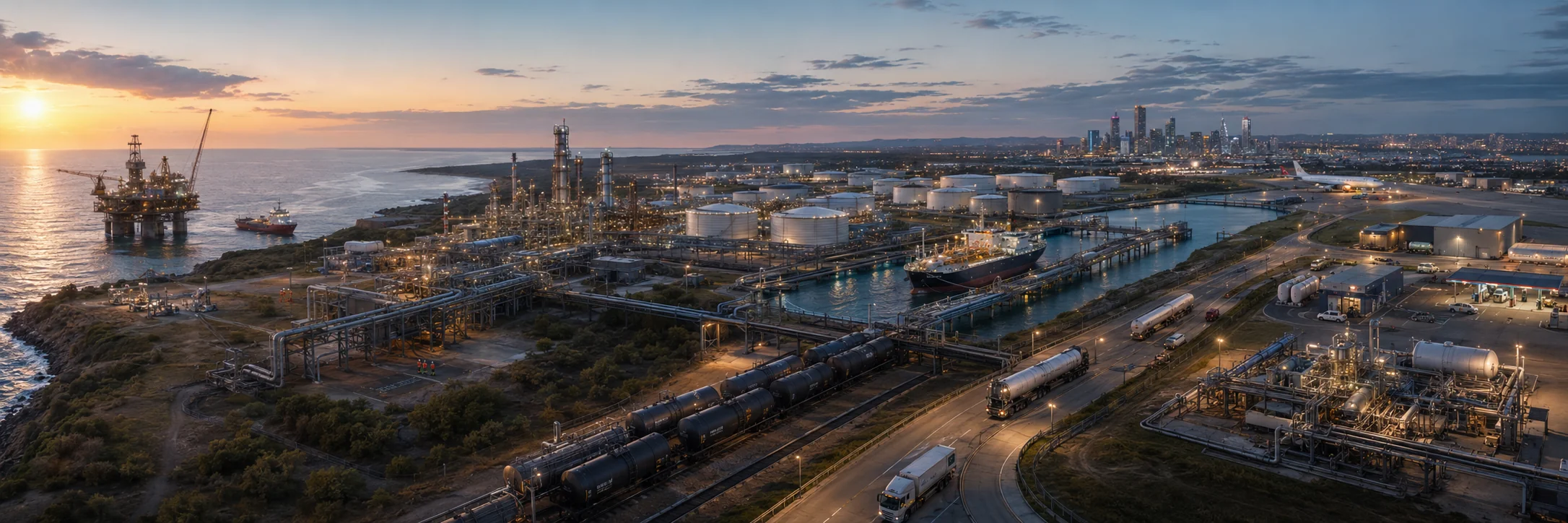
Oil and gas begin as variable fluids in rock. The upstream chain separates them into oil, gas, water, and contaminants, then sends the two saleable streams into different routes whose products and burdens remain connected.
One reservoir produces several streams
Users need motion, heat, electricity, lubricants, asphalt, plastics, hydrogen, or other chemical functions. A reservoir supplies none of these directly. A well brings up a changing mixture of oil, gas, water, salts, sand, carbon dioxide, sulfur compounds, and other material. Separators, heaters, dehydrators, stabilizers, gas plants, and water systems create the first usable products.
The article therefore treats oil and gas as an upstream umbrella. After separation, oil mainly enters storage, tankers, pipelines, and refineries; methane enters processing, pipelines, storage, liquefaction, or power and industrial users; water and contaminants require their own treatment or disposal routes. The streams share geology, wells, gathering, and operating money, then diverge.
Geology fixes the first boundary
Depth, pressure, permeability, temperature, fluid composition, and water saturation determine how a field can be drilled and produced. Conventional reservoirs, tight formations, offshore fields, and oil sands need different wells, lifting systems, roads, water handling, and processing. A reserve estimate describes hydrocarbons in rock; it does not establish a permitted, financed well that can deliver a specified stream.
Production also changes the field. Pressure declines, water may be injected or produced, land and seabed are occupied, and methane can escape. A project may increase recovery by adding energy, chemicals, or wells while creating new monitoring and abandonment obligations. The physical question is which stream can be produced at the required rate and with a route for every displaced output.
Gathering makes the stream movable
Flowlines and gathering systems bring multiple wells to separators and processing plants. Pumps, compressors, dehydration, and water treatment keep the stream within equipment and sales limits. A meter can record volume at a boundary, while a sample reports selected chemistry; neither captures every well condition or every transient in a long gathering system.
Aggregation makes processing and transport practical but reduces resolution. When wells are blended, a later off-specification result may identify a plant or gathering area without identifying the well, chemical addition, or maintenance event that caused it. The saleable barrel or gas molecule is only one output; produced water, sand, sulfur, carbon dioxide, and waste heat also need routes.
Oil and gas then take different paths
Stabilized crude moves by pipeline, tanker, rail, or truck to a refinery. Natural gas is processed to remove water and contaminants, then sent through transmission pipelines, storage, LNG terminals, or local distribution. Natural-gas liquids may be fractionated into ethane, propane, butanes, and natural gasoline for fuel or chemical use. These are not interchangeable routes.
A pipeline connection does not prove that a refinery has the right crude slate, and a gas resource does not prove that a power plant has local pressure and capacity. Terminals, compressors, tanks, ships, and interconnections create location-specific boundaries. LNG and pipeline delivery are related branches, not the same physical chain; the dedicated articles follow them in more detail.
Refining creates a product slate
At a refinery, crude is separated by boiling range, converted through cracking, coking, or reforming, treated to remove sulfur and other contaminants, and blended into products. The EIA describes these as separation, conversion, and treatment. Changing one unit can change hydrogen demand, heat balance, intermediate inventories, wastewater, and the mix of gasoline, diesel, jet fuel, asphalt, and chemical feedstocks available.
A refinery assay or fuel certificate establishes selected properties in a sample or batch. It does not prove that every tank, delivery, engine, or combustion condition had the same history. A product specification is necessary for use, but it is not a complete account of extraction, transport, emissions, or abandonment.
Money arrives before the next barrel
Drilling, well work, compressors, water treatment, inspection, spare parts, and emergency response require money before a sale. A producer may need to finance a shut-in well, a pipeline repair, or methane controls while revenue is absent. A refiner may need a credit line to hold crude, maintain a unit, or buy a replacement feedstock during an outage.
Contracts define who pays for which part. A sales contract can recognize oil volume while produced water, carbon dioxide, and future plugging remain outside the invoice. A tariff can recover some pipeline integrity and capacity costs, but a contract price alone does not show whether the funds, crews, and outage window for a repair are available. Money changes the options before the physical decision; it does not erase the remaining burden.
Storage changes the timing of a stream
Tanks and underground storage can separate production from use, but they do not make every oil or gas stream interchangeable. Crude tanks need compatible heating, vapour control, blending, and pipeline or marine access. Gas storage needs injection and withdrawal wells, compression, cushion gas, and a connection to the consuming market. The EIA describes storage as a response to seasonal demand, refinery maintenance, and unexpected supply disruption, not as an unlimited substitute for production or transport.
A demand shock meets fixed equipment
The 2020 pandemic provides a documented case. EIA reported a steep fall in petroleum demand, refinery runs, and prices, while crude production and storage responded on slower physical clocks. On April 20, 2020, limited available storage at Cushing helped push a near-month WTI futures contract below zero; EIA explains that excess crude had to be placed into storage while demand collapsed.
The episode did not mean oil had become physically worthless everywhere. It showed that a barrel in a producing region, a tank with spare capacity, a refinery with the right slate, and a fuel at a retail station are different conditions. Price and futures records observed a financial boundary; they did not create tankage, pipelines, or a product route.
Records describe selected boundaries
A reserve report estimates subsurface quantities. A well test measures flow and pressure under stated conditions. A custody meter records volume. A bill of lading identifies a cargo. A refinery assay measures selected chemistry. An emissions inventory applies a defined accounting method. Each can be accurate within scope while leaving other parts of the chain unobserved.
Methane can escape during production, processing, transmission, storage, and use; EPA's segment estimates show why a sales meter is not the atmospheric result. A record can make a handoff legible without proving the condition of land, water, workers, equipment, or the next user.
Use converts the streams
Combustion converts methane or petroleum products into heat, motion, electricity, carbon dioxide, water, and pollutants. Chemical processing can keep carbon in plastics, solvents, lubricants, or other products for a while, but later use and disposal still determine where that material goes. Once a fuel is burned, its original chemical energy and product identity cannot be recovered as the same fuel.
Water, drilling muds, spent catalysts, refinery sludge, contaminated soil, flared gas, and abandoned equipment are not external to the chain. A named co-product route is not evidence that every separated stream reached that use.
Abandonment outlasts production
Wells, platforms, tanks, pipelines, refineries, and contaminated sites remain after revenue stops. Plugging, purging, dismantling, soil and water monitoring, waste treatment, and long-term integrity work need authority and funds. A complete account connects the users of oil and gas to these continuing obligations without pretending that one company or one measurement can observe the whole process.
What a complete upstream account keeps connected
The upstream system is complete only as an account when reservoir condition, well streams, separation, water and contaminant routes, divergent oil and gas infrastructure, users, emissions, and abandonment remain connected to the people able to change them. The saleable barrel or gas volume is one observation inside that larger process, not the whole result.
Inside CompanyGraph
Inside CompanyGraph, map reservoirs, operators, service firms, gathering systems, gas processors, pipelines, LNG terminals, storage sites, refineries, distributors, users, regulators, and abandonment contractors. The graph can show where oil and gas diverge and where custody or contracts change; direct evidence is still needed for current flow, emissions, condition, and corrective authority.