 CompanyGraph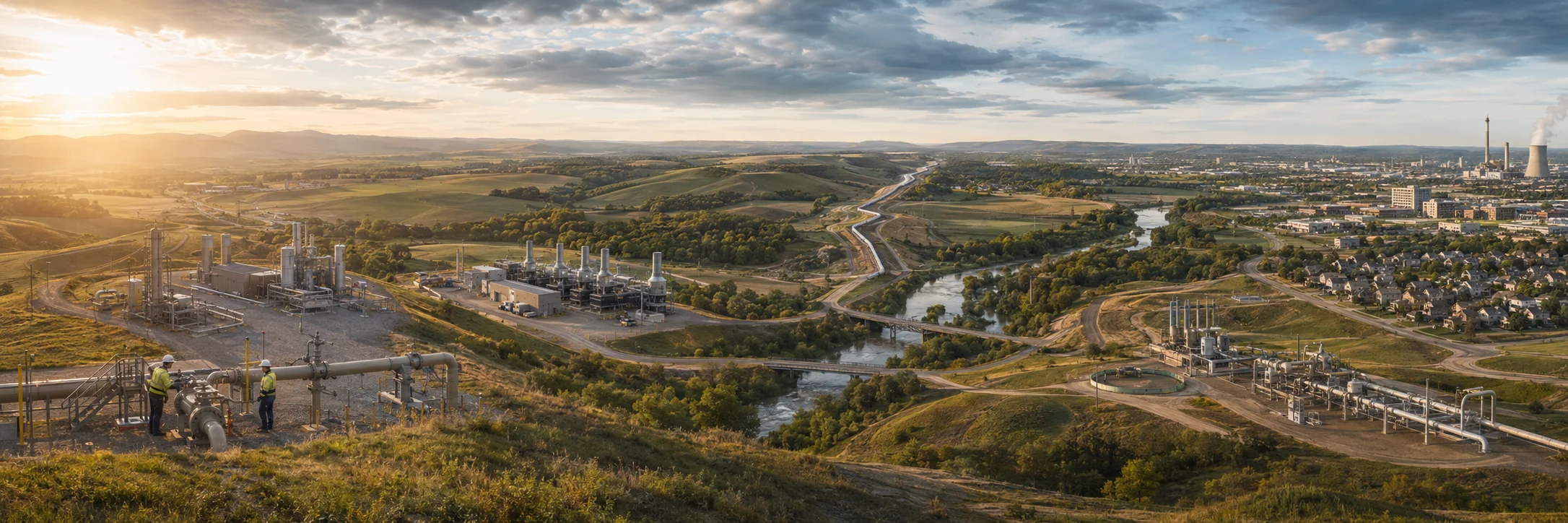
A natural-gas pipeline supplies controlled flow at the pressure, composition, place, and time a burner or power plant needs. Wells and molecules matter, but compressors, storage, nominations, and local connections decide deliverability.
The service is gas at the burner
A household needs heat, a factory needs a process flame, and a power plant needs fuel at the moment its generator is dispatched. The useful output is not a trillion cubic feet in a basin or a full storage field. It is gas that reaches a particular meter at a usable pressure and quality within the operating window.
The chain runs from wells and gathering lines through processing, high-pressure transmission, compressors, underground storage, distribution networks, meters, and appliances. The EIA pipeline overview describes transmission and distribution as distinct parts of the route to users. Every segment is physically coupled to the next. A production surplus can coexist with a local shortage if the route, pressure, or connection is missing.
Processing makes methane pipeline-ready
Raw gas contains water, carbon dioxide, nitrogen, heavier hydrocarbons, hydrogen sulfide, and other components. Gathering and processing remove or separate material that would corrode equipment, freeze, violate interchange specifications, or create unsafe combustion. The residue streams include produced water, sulfur, carbon dioxide, and hydrocarbons that need their own handling.
A gas-quality sample reports selected properties at a point and time. It does not establish that every molecule in a long line met the same condition or that upstream leaks were absent. Odorization, pressure regulation, and metering at the distribution edge add more transformations before the gas reaches the burner.
A pipeline is a pressure-managed machine
Steel pipe provides the route, but flow depends on diameter, roughness, pressure, valves, compressor stations, line pack, temperature, and the ability to isolate a section safely. Compressors increase pressure using gas or electricity; their own fuel consumption and maintenance reduce the net gas available downstream.
Corrosion control, inspections, emergency shutoff, welding quality, and right-of-way access are part of the service. A pipe shown on a map may be unavailable because of a rupture, inspection, pressure limit, or a valve that cannot be operated. Capacity must be named as a tested flow under stated conditions, not as a length of steel.
Compressors spend gas to move gas
Transmission operators schedule compressor operation and balance injections with withdrawals. Higher demand can require more compression and can expose a bottleneck at a station, junction, or downstream city gate. Power failures and extreme temperatures can affect both the gas network and the electricity system that supplies compressor motors.
Maintenance and integrity work require money before a tariff or delivery payment arrives. A preventive inspection can reduce the chance of rupture but may require taking a segment out of service. If a private contract recognizes only delivered volume, a planned outage or redundant compressor may be difficult for that participant to recover directly; regulated pipelines may recover approved integrity and capacity costs through tariffs. The payment mechanism therefore depends on the market and regulatory arrangement.
Storage buys time but only where geology permits
Underground storage uses salt caverns, depleted fields, or aquifers with different cycling rates, working volumes, and withdrawal limits. Gas stored in one region cannot automatically relieve a pressure shortage in another. A full field can have insufficient deliverability if withdrawal wells, compressors, or pipelines are constrained.
Storage also carries cushion gas, monitoring, integrity, and leakage obligations. An inventory report states a quantity under a measurement method; it does not establish the rate at which the gas can reach a particular city during a cold event.
Nominations and tariffs turn flow into a contract
Shippers nominate quantities and schedules, pipeline operators allocate capacity under tariffs, and balancing rules settle differences between scheduled and actual flow. These records coordinate a system, but they are not the gas itself. A nomination can be accepted while a compressor trips or a downstream pressure falls.
Money arrives at several clocks. Producers finance drilling and gathering before sales; pipelines fund steel, compressors, land, and safety work; utilities purchase gas before retail bills are collected. A firm transportation contract has a defined contractual priority and obligation, but it cannot make an unavailable pipe or compressor operate through every disturbance. Interruptible arrangements may be cheaper while leaving a user exposed when the system is tight.
A cold event exposes the coupled system
During Winter Storm Uri in February 2021, freezing temperatures disrupted U.S. gas production and pipeline compressors while electricity demand rose. EIA reports that Texas natural-gas production fell sharply and that power outages also reduced gas production; the documented event shows the coupled failure more clearly than a generic cold-snap scenario. A generator that has a contract may still be curtailed if the local network cannot deliver the required pressure. Electricity reliability can then worsen gas-system stress, and gas shortages can reduce generation that would otherwise power the grid.
The visible shortage appears at the burner or power plant. The cause may have begun with frozen equipment, poor weatherization, a nomination error, a compressor outage, or a missing interconnection. The actor who sees the consequence may not control the upstream repair or have money to change it.
Meters and nominations see different conditions
A meter measures flow at one boundary. A nomination describes an intended quantity and time. A pressure sensor observes a local state. A pipeline integrity record reports an inspection. A gas-quality certificate samples selected compounds. Each is useful and limited.
Communicated claims such as “firm supply,” “available capacity,” or “storage is full” must stay within those observations. They do not establish that a household will receive gas during every disturbance, that methane leakage is negligible, or that a replacement route can be activated without delay.
Methane and displaced outputs continue
Leaks, venting, flaring, compressor fuel, produced water, corrosion waste, and abandoned pipe remain part of the chain. Combustion converts methane to carbon dioxide and water while producing heat and pollutants. Methane emissions can occur during production, processing, transmission, and storage; EPA's segment estimates describe why a sales meter cannot stand in for the whole atmospheric result.
Retirement requires purging, isolation, monitoring, removal or abandonment decisions, and protection of land and water. Revenue can end before those obligations do.
Line pack is not underground storage
Gas held inside a transmission pipe, known as line pack, can smooth short-term withdrawals because pressure changes alter the amount in the pipe. It is not the same as a storage field: its usable volume depends on pressure limits, flow direction, compressor operation, and the integrity of the line. A nomination or inventory report can therefore overstate what can be withdrawn at a city gate during a peak hour.
The distinction mattered during Winter Storm Uri. EIA reports that freezing temperatures disrupted production and compressors and that electricity outages contributed to gas-production losses. The event showed a coupled dependency: a gas system needs electricity to operate some equipment, while the electricity system needs gas at a particular pressure and time.
Inside CompanyGraph
Inside CompanyGraph, map producers, processors, transmission operators, storage fields, distribution utilities, power plants, industrial users, regulators, and maintenance contractors. The graph can show contracts and handoffs; direct operating evidence is still needed to know pressure, quality, leakage, and who can change the next condition.