 CompanyGraph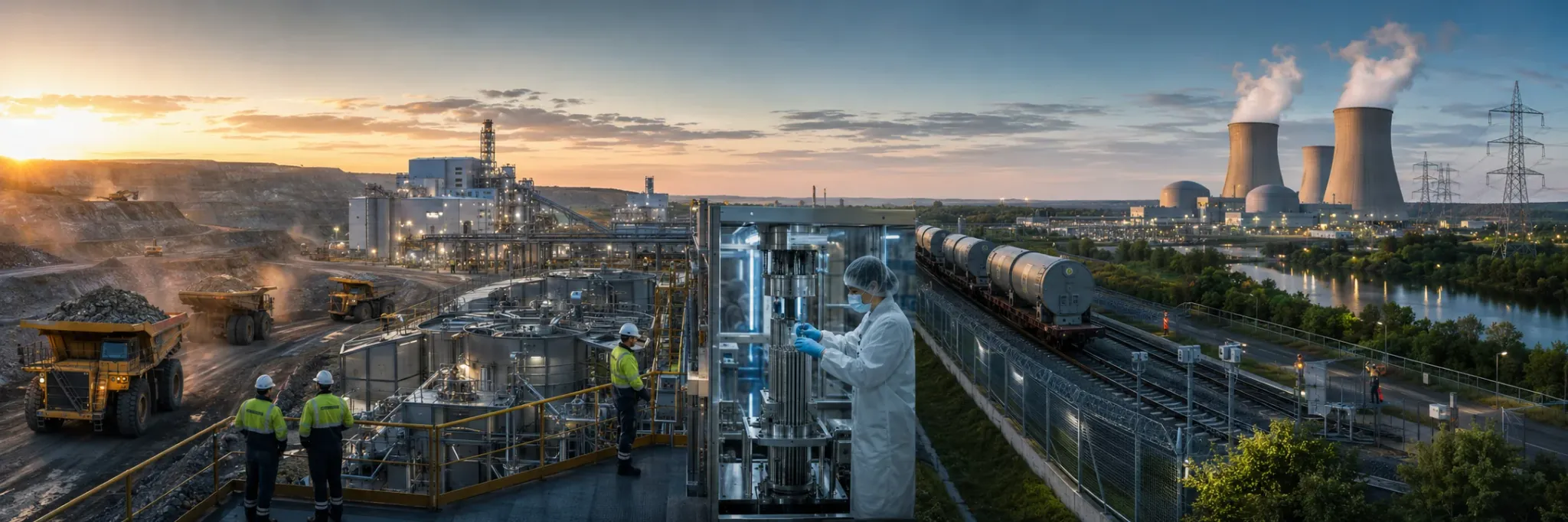
Deposit geology determines extraction method and cost structure for each mine, while radioactive material handling requirements impose specialized operational, transportation, and storage costs throughout the supply chain.
The uranium industry extracts and concentrates the fissile material that serves as the primary fuel input for nuclear power generation. The process begins with exploration and deposit assessment, followed by extraction through open-pit mining, underground mining, or in-situ leaching, and concludes with milling into yellowcake concentrate suitable for entry into the conversion and enrichment stages of the nuclear fuel cycle.
The industry's structure is defined by geological constraints, regulatory intensity, and a concentrated buyer base. Nearly all uranium demand originates from nuclear power utilities that procure fuel through long-term contracts, creating a market where price discovery is opaque and the relationship between spot prices and actual transaction prices is often indirect. Radioactive material handling imposes specialized costs across extraction, processing, transportation, and storage, while multi-year licensing timelines constrain the pace at which new supply can enter the market.
As an upstream supplier to the nuclear fuel cycle, uranium producers are structurally distant from the final power consumer. Yellowcake must pass through conversion, enrichment, and fuel fabrication before reaching a reactor, meaning that disruptions at downstream stages can affect demand for mined uranium independently of reactor operations. Secondary supply sources — government stockpiles, decommissioned weapons material, and re-enrichment of depleted tails — operate on different economic logic than primary mining, adding complexity to market balance.
Structural Role
Supplies the primary fissile material required for nuclear power generation by connecting finite geological uranium deposits to the front end of the nuclear fuel cycle through extraction, milling, and concentration operations.
Scale Differentiation
Large producers operate across multiple deposits and geographies, maintain long-term utility contracts providing revenue visibility, and can flex production between assets based on cost and market conditions. Scale supports the specialized compliance, safety, and environmental management infrastructure that uranium operations require. Small producers typically operate single deposits and sell into spot markets or short-term contracts, making them sensitive to price cycles and lacking financial reserves to maintain operations during extended price downturns.
Connected Industries
Farm & Heavy Construction Machinery
Supplies inputs to
Mining equipment for extraction
Specialty Chemicals
Supplies inputs to
Chemicals used in processing and in-situ leaching
Utilities Diversified
Supplies inputs to
Utilities Independent Power Producers
Supplies inputs to
Utilities Regulated Electric
Supplies inputs to
Nuclear fuel for reactor-based electricity generation
Stocks
Bannerman Energy Ltd.
BNNLF
Berkeley Energia Limited
BKY
Cameco Corporation
CCO
Centrus Energy Corp.
LEU
CGN Mining Co. Ltd.
1164
Deep Yellow Limited
DYL
Denison Mines Corp.
DML
Encore Energy Corp
EU
Energy Fuels Inc.
EFR
IsoEnergy Ltd
ISO
IsoEnergy Ltd.
ISO
NexGen Energy Ltd.
NXE
Paladin Energy Ltd
PDN
Uranium Energy Corp.
UEC
Uranium Royalty Corp.
URC
Ur-Energy Inc.
URE
Yellow Cake Plc
YCA