 CompanyGraph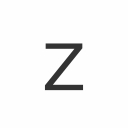
Operates an integrated aluminum business, smelting metal using its own power generation and coal capacity, then processing it into finished products sold to industrial manufacturers rather than consumers.
- Revenue is growing, but receivables have grown faster over the last six to eight years
- Depends onMidstream position: 6 outgoing, 6 incoming connections
- ScaleMarket cap is $3.33B, above the global median of $1.15B
- FinancialsAltman Z-Score 3.3: safe zone
- Interpretations3 currently firing — 3
What this company is and how it runs — written from structure, not news.
The system coordinates the conversion of energy and raw material inputs into aluminum in its smelted form, then further into processed alloy, foil and sheet products, before that output moves onward to a range of manufacturing industries downstream. It sits in the middle of its supply chain, drawing inputs in on one side and routing finished product out on the other, rather than sitting at either raw-material extraction alone or final consumer sale.
The company has recorded a profit in every year CompanyGraph has on file for it, but its working-capital signals point in different directions at the same time: revenue has grown more slowly than the amount customers owe it over a multi-year stretch, inventory turns over quickly, and the company pays its own suppliers quickly too, the opposite of the usual approach of stretching out payments to preserve cash. Taken together, this describes a business paying its own bills fast and moving goods fast, while collecting from its customers more slowly over time, rather than one optimizing its cash cycle in a single consistent direction.
Market value gives the business a specific size at a point in time, but CompanyGraph has no comparable figures for the other companies that share its production structure, so it cannot say where that size sits relative to them, and it also lacks margin or return data that would show whether growth has translated into better returns at scale. What is clearer from its own account is the growth mechanism itself: additional recycled-aluminum processing capacity is currently under construction, meaning growth here comes from adding new physical conversion capacity rather than from expanding output on plant already installed.
The company sits in the middle of its supply chain, with upstream links reflecting reliance on suppliers into its smelting process that CompanyGraph cannot name. Its own account separately describes capacity it holds in power generation, split between hydro and thermal sources, and in raw coal, alongside its aluminum smelting and processing lines, suggesting some of the energy and fuel feeding its metal production is held within its own operations rather than bought entirely from outside parties.
The company's own account names Coca-Cola and Budweiser among the downstream brands it supplies, and states its products are used in packaging for consumer goods, in new-energy vehicles and in consumer electronics, sold to manufacturing customers across many countries rather than to individual consumers. Its dependents, on this account, are industrial buyers who convert its aluminum into their own finished goods, not the final households or drivers who use those goods.
CompanyGraph places this company within a large group of other producers that share the same basic production structure, a common way of organizing aluminum production rather than a distinctive one. Its own account also describes a specific split between hydro-powered and thermal-powered electrolytic aluminum capacity, a real feature of how its power is sourced, though CompanyGraph has no comparative data on how other producers in that group source their power, so it cannot say whether this split is unusual or something rivals could not replicate. Structurally near is not the same as moving together or being interchangeable, it means CompanyGraph sees a shared way of operating or a detected pattern, not a price relationship or a comparison verdict.
The industry classification here carries a starting assumption that producers of this kind are ultimately limited by a finite resource base that shrinks with every unit taken out of it, but what the company's own account discloses reads differently: fixed annual capacity across electrolytic aluminum smelting, recycled aluminum, further-processed aluminum products and carbon products, alongside power-generation capacity split between hydro and thermal sources. That is a description of a ceiling on how much can be converted through existing plant, not of a shrinking resource base, so the industry-level assumption about depletion is not directly confirmed by what the company discloses about itself here; the more concrete limit visible is a processing and power capacity ceiling, one its own account also shows it is currently adding to.
CompanyGraph's classification of this industry carries a starting assumption, tested rather than assumed true, that producers of this kind face pressure from needing to keep replacing the natural resources they draw down and from the cost of extracting and processing those resources relative to the prices they can sell into; this is applied across companies classified this way, not measured for this specific company. Nothing on file for this company describes named regulators, trade measures or proceedings that would show whether, or how, that pressure actually applies here.
Read from the company's own filings and public materials (gathered August 2026) together with figures CompanyGraph recomputed from its statements. Written September 2026. A question with no evidence behind it is left out rather than answered.
Sign in to view price data.
Sign inWhat the company actually pays, and whether its own cash supports it.
The reported statements, read against the company's own industry.
- Revenue is growing, but receivables have grown faster over the last six to eight years
3 interpretations currently present — each is a set of fired observations whose alignment reads as one structural pattern. Click an observation to see the numbers behind it.
Screen for these patternsHow does this company use capital?
Working Capital Pattern
What customers owe has grown three years running, while it clears stock quickly and pays suppliers quickly.
How is this stock valued?
Price Below Mean With Profitability And Book Value
Price sits well below its yearly mean, on three profitable years and rising book value.
Price Below Mean With Profitability And Equity
Price sits well below its yearly mean, profitable three years, and its equity ratio is high for its industry.
An interpretation is present only while every observation it reads stays fired (score ≥ 70). It describes what the aligned readings show — never a verdict, never a prediction.
Shared structure with peers — never a ranking.
Structural observations derived from financial data, industry benchmarks, and supply chain position.
Structural Tensions
Financial Health
Supply Chain
Scale
Companies that share the same coordination system — how they create, deliver, or capture value.
Companies that share active interpretations — structural patterns currently present in both stocks.