 CompanyGraph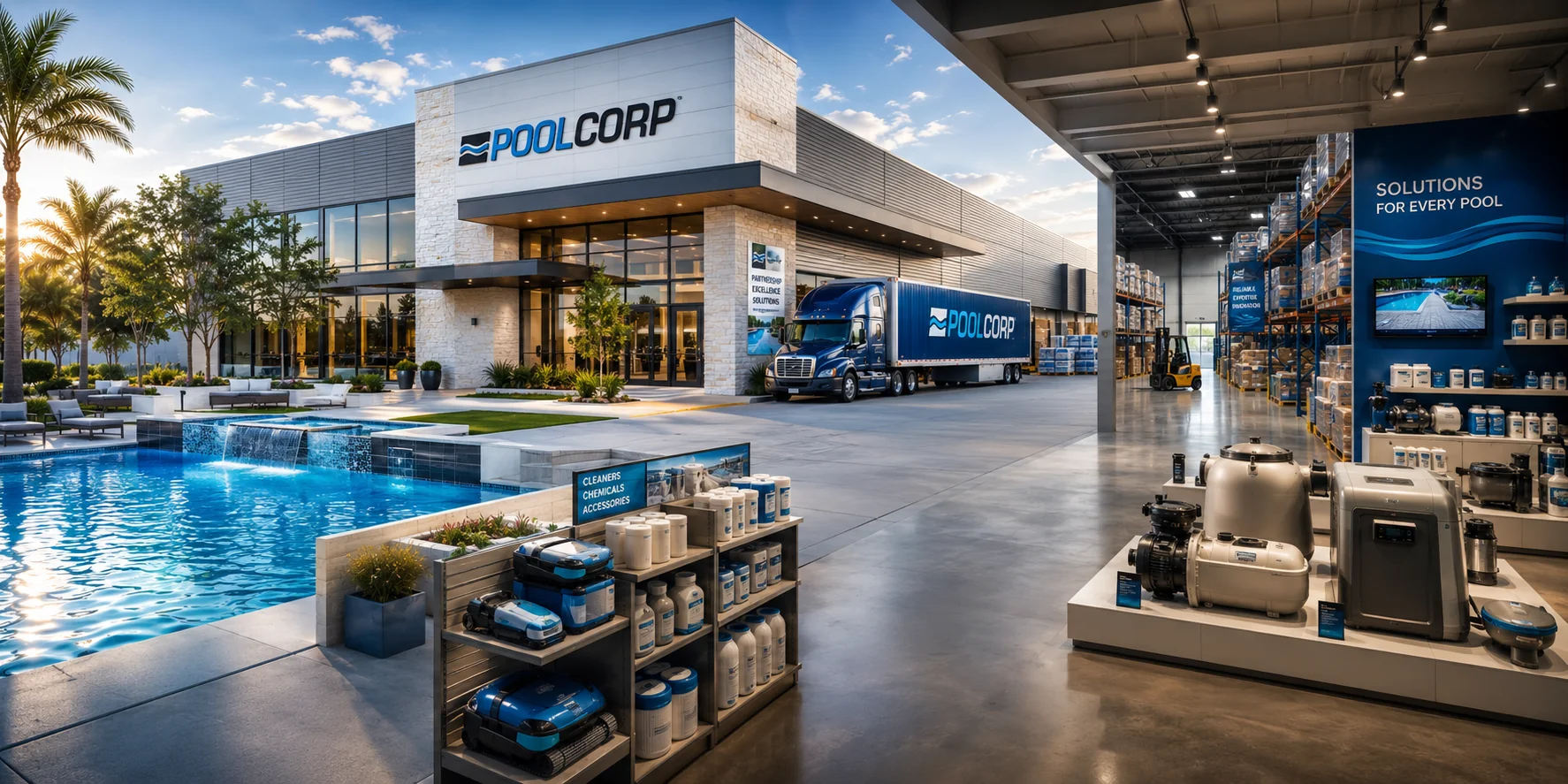
Pool Corporation's long story is about the installed pool after construction: chemicals, equipment, advice, and replacement parts must be nearby and available when the water or machine requires them.
The output is a maintained pool
A pool owner does not need a pallet of chlorine or a catalogue of pumps. The desired result is water within a safe operating range, circulation that works, equipment that can be repaired, and a service provider who can obtain the right part in time. The distribution chain is successful only when the product becomes a working intervention at the pool.
Pool's 2025 Form 10-K describes the company as the world's largest wholesale distributor of pool supplies and related products. It operated 456 sales centers in North America, Europe, and Australia, serving builders, pool-service companies, retailers, commercial operators, and landscape contractors. The sales center is therefore part warehouse, part local knowledge, and part timing mechanism.
Construction and maintenance have different clocks
A new pool needs excavation, structure, plumbing, circulation equipment, filtration, sanitation, controls, and finishing materials. An existing pool needs testing, dosing, cleaning, seasonal opening and closing, leak or pump diagnosis, and replacement parts. A distributor that serves both routes can use a broad branch network, but the products are not interchangeable and the demand peaks are different.
Weather exposes this difference. Pool's filing identifies hot, dry weather as increasing purchases of chemicals and supplies for existing pools, while cool or unusually wet weather reduces installations and chemical purchases. A revenue number can show the result of that weather; it cannot tell whether a local service company lacked stock, a homeowner delayed maintenance, or the pool remained unsafe.
Density makes local availability possible
Pool operates a network of sales centers because a service technician cannot wait indefinitely for a filter, fitting, or regulated chemical shipment. Local stock reduces travel and downtime, but it ties up working capital in seasonal and sometimes hazardous inventory. The company reports major supplier relationships, including Pentair, Zodiac, and Hayward, and must manage source continuity, quality, and competing products.
Money determines which stock a branch can carry before the summer season and which emergency order is affordable after a failure. A branch can be profitable over a year while a specific replacement part is unavailable today. The distributor, builder, and service company each protect a different cash position, so a technically preferable repair may be delayed until a compatible part, labor slot, and customer payment align.
A shipment is not water quality
A sales invoice establishes that a product was sold. A test strip or laboratory result observes one sample of water. A service record can show that a technician visited. None alone establishes the condition of the whole pool between visits, the calibration of equipment, or whether the customer followed the instruction.
Product identity and lot information matter when a chemical defect or equipment recall appears. Feedback must still return to the right manufacturer, branch, service company, installer, or operator. A national sales number can remain healthy while a local pool waits for the part that would prevent a pump failure from becoming a larger repair.
The installed base is an obligation as well as an asset
Pool's density can compound because existing pools need recurring supplies even when new construction slows. It is not a law of nature: weather, housing conditions, water restrictions, regulation of hazardous materials, e-commerce, and competition can shift where the feasible route runs. The company remains dependent on manufacturers, local technicians, branch labor, and customers who can pay for maintenance.
The long-term story is therefore less about selling into a large installed base than about preserving the local connection between a pool's changing condition and the product, knowledge, money, and time needed to correct it.