 CompanyGraph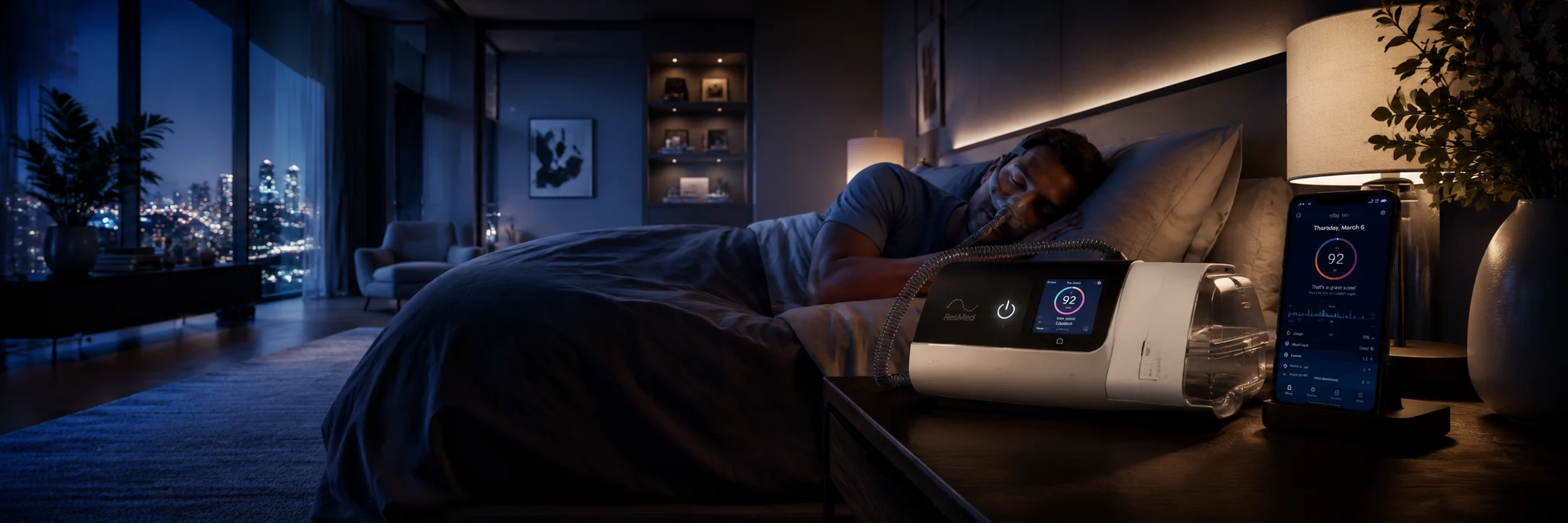
ResMed's long story is about making a prescribed breathing therapy usable at home night after night, then using connected data and recurring supplies to keep the treatment route open.
The output is therapy used correctly
A patient does not need a device shipment alone. They need a mask that seals, airflow at the prescribed setting, comfortable humidification, electricity, cleaning, replacement parts, clinical oversight, and enough support to continue using the device. The useful result is a night of therapy that helps the patient's condition, not a machine sitting beside the bed.
ResMed's FY2025 filing describes cloud-connected devices, AirView patient management, myAir self-help, and the AirSense platform. It reports more than 30 million cloud-connected devices, over 33 million AirView patient accounts, and more than 10.3 million myAir registrants at fiscal year-end. These figures show a large information and device network, not identical therapy outcomes.
A device becomes treatment through interfaces
AirSense equipment controls pressure and may include humidification, but the mask, tubing, water chamber, power supply, software, and patient fit determine whether the prescribed airflow reaches the airway comfortably. A provider selects and adjusts equipment; a homecare company may supply it and handle replacement; the patient creates the nightly operating condition.
A new device can therefore be physically present while therapy remains inaccessible. Leak, discomfort, noise, travel, a broken humidifier, or an unavailable replacement cushion can end use without appearing as a product defect in the machine itself.
Data makes adherence visible, not guaranteed
AirView and myAir can record usage, events, leaks, and coaching interactions under defined systems. The records can help a clinician or provider find a problem earlier than a periodic visit. They do not independently establish sleep quality, daytime function, diagnosis, or whether the patient followed every instruction outside the recorded session.
The feedback path is strongest when device identity, mask, settings, patient context, symptom report, and intervention remain connected. A low-use signal may require a mask change, pressure adjustment, education, financial help, or a different therapy. A dashboard cannot choose among those corrections without a person able to act.
Money determines continuity at home
ResMed finances device design, software, manufacturing, clinical work, service, and distribution before reimbursement or retail payment arrives. Patients and providers must finance or obtain the machine, mask, supplies, electricity, and follow-up. Insurance rules can make the device reachable while making replacement supplies, travel equipment, or a timely clinical adjustment harder to obtain.
Recurring supplies are not merely a revenue stream. Masks, cushions, filters, tubing, and water chambers change condition through use and need replacement to preserve fit and hygiene. A patient can own a durable device and still lose the therapy route when a small consumable or a provider appointment is unavailable.
Scale creates a responsibility problem
ResMed's connected installed base can improve product design, coaching, and provider workflows. It also concentrates responsibility across manufacturer, cloud operator, clinician, homecare company, payer, and patient. A software update, privacy incident, device recall, or supply shortage can affect different parts of the route.
The long-term system is complete when a prescribed therapy reaches the patient in usable condition, data and symptoms can return to someone who understands the problem, and the patient has the money, supplies, and authority needed to keep the next night possible.