 CompanyGraph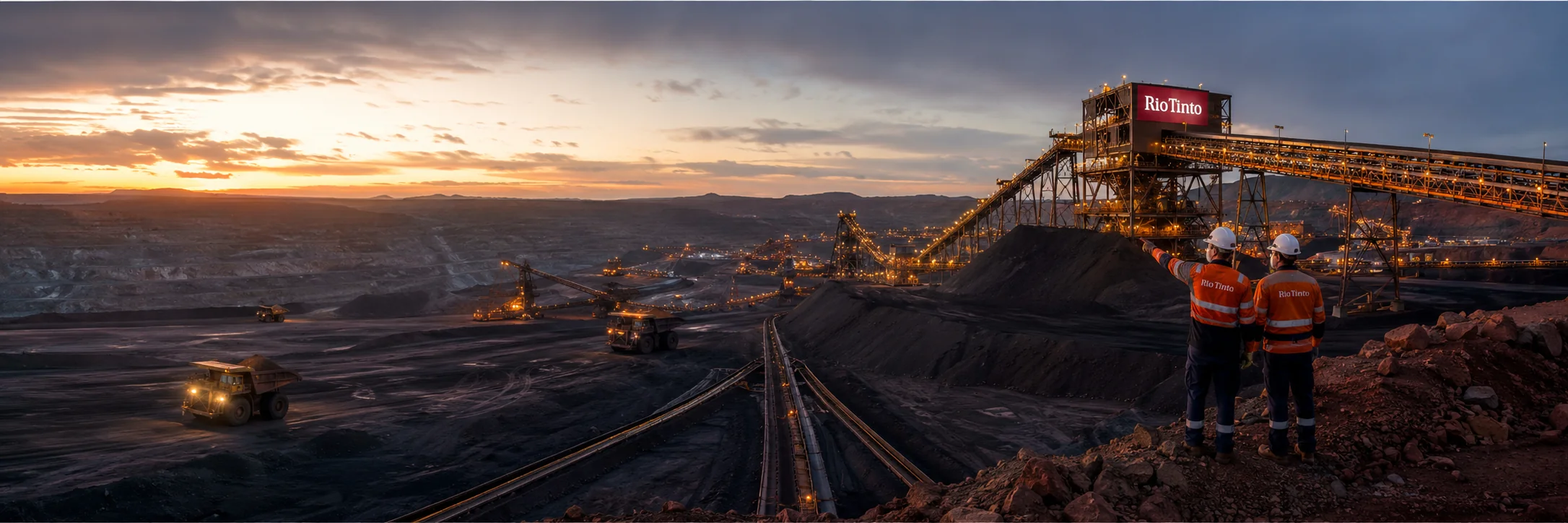
Rio Tinto does not sell an abstract tonne of rock. It moves particular ore bodies through mines, plants, railways, ports, smelters, contracts, and closure obligations until a customer receives a usable material.
The mine starts with an ore body, not a product
Steelmakers, smelters, and manufacturers need material with a particular chemistry, moisture, size, and delivery pattern. A deposit contains a changing mixture of minerals, waste rock, water, and impurities. The mine plan decides which parts can be extracted, blended, crushed, concentrated, or discarded while still meeting a customer's specification.
That makes geology part of the product. A high-grade zone may be easier to process but finite; a lower-grade zone may require more stripping, crushing, water, or beneficiation. The same published production number can therefore conceal different energy use, recovery, equipment wear, and remaining mine life.
Processing assigns the material its next use
In iron ore, crushing, screening, blending, and sometimes beneficiation turn run-of-mine material into products that a blast furnace or direct-reduction plant can accept. Copper ore follows another route: concentration produces a sulphide-rich concentrate, which a smelter and refinery turn into metal. Bauxite, alumina, and aluminum introduce another sequence of digestion, calcination, electrolysis, and casting.
Rio Tinto's 2025 Form 20-F reports 327.3 million tonnes of Pilbara iron-ore production and 326.2 million tonnes of shipments, alongside copper and aluminum output. Those figures establish movement through an operating system; they do not show every parcel's grade, recovery, queue, or final use.
Rail and ports are part of the mine's product
In the Pilbara, mines, stockyards, approximately 2,000 kilometres of rail, and four export terminals form one operating chain. A crusher can make material, but a train must collect it, a port must load it, and a vessel must arrive inside the contractual window. Cyclones, equipment failures, maintenance, and channel constraints can leave ore in a stockpile while a steelmaker waits for a shipment.
Working capital also changes the physically available choice. A mine must pay for fuel, contractors, labour, sustaining capital, water, and rehabilitation before a cargo is paid for. When prices fall, deferring stripping or maintenance may protect near-term cash while narrowing future access to the ore body or reducing reliability. The accounting result is a financial decision with a physical tail.
Commodity cycles do not pause obligations
Prices and demand can change faster than a mine, rail line, smelter, or port can be redesigned. Expansion requires approvals, power, construction, and qualified workers. Closure requires removing equipment, stabilising waste, treating water, monitoring landforms, and meeting commitments after revenue has ended. A profitable quarter does not prove that these future routes are funded.
What the measurements can and cannot show
Shipment tonnes, head grade, recovery, train availability, port throughput, and unit cost observe different boundaries. A production report cannot establish whether a particular customer received the required chemistry; a mine-plan model cannot prove that a slope will behave as predicted; an environmental record cannot by itself establish every downstream effect. Corrective action depends on the observation retaining its location, material identity, time, and responsible authority.
Rio Tinto's scale can spread a process improvement across a large system, but it can also spread a wrong blend or maintenance assumption. The durable advantage is not tonnage alone. It is the ability to keep ore-body knowledge, processing, logistics, capital, customer specifications, safety, and closure connected long enough for the next decision to remain physically possible.