 CompanyGraph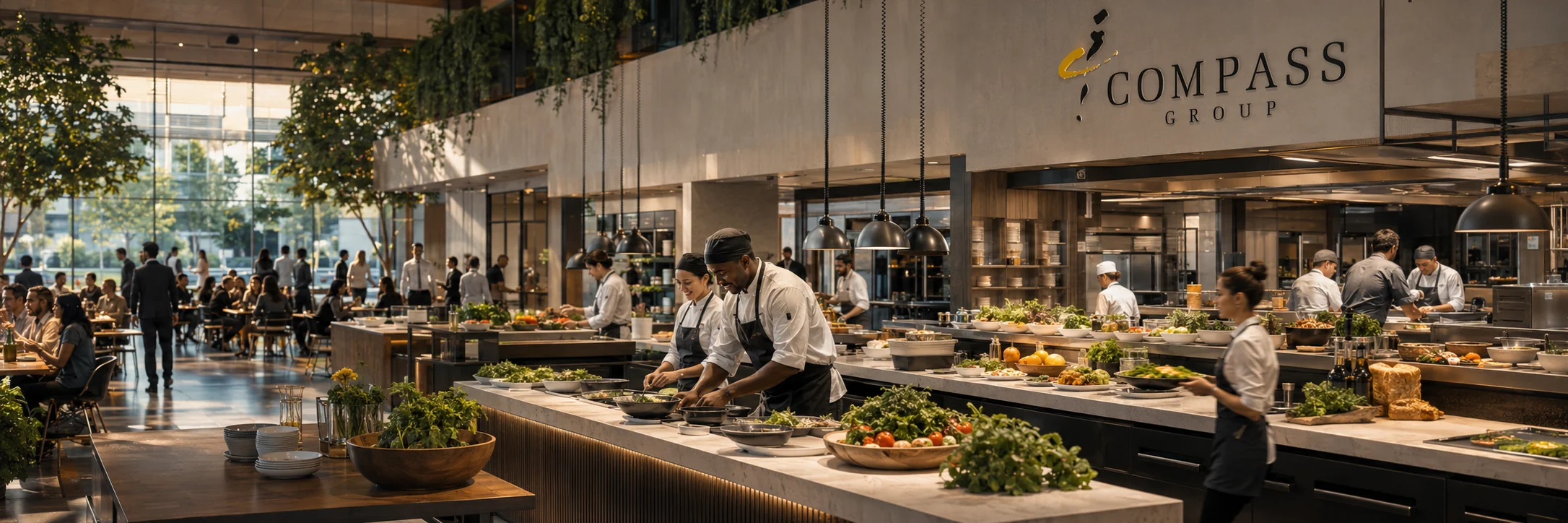
Compass Group does not supply food service through ingredient tonnage or meals ordered alone. A client requirement must remain connected to procurement, delivery, storage, preparation, cooking, dietary and allergen controls, staffing, service timing, payment, and feedback at a particular site. A shipment or safety record can be correct while a meal still fails because the kitchen, menu, timing, equipment, or information at the point of service was wrong.
A meal is a site-specific service
A food-service contract is fulfilled only when a safe and suitable meal reaches the right person at the required time. Ingredients, a menu, or a transaction count are not enough. Compass Group's 2025 Annual Report describes the company as a provider of contract food services and support services, with procurement, safety, and on-site teams as operating foundations. The annual report describes that model.
This article follows a meal from client requirements and procurement through supplier delivery, storage, preparation, cooking, labeling, service, payment, and waste. The physical principles are general, while Compass's contract and service examples are company-specific.
A client requirement enters a kitchen
A client contract sets service time, menu, price, volume, dietary requirements, and responsibilities. Compass and its suppliers turn agricultural, animal, processed, and packaged inputs into ingredients delivered to a site. Receiving staff inspect, record, and store them under temperature and separation requirements. Kitchen staff thaw, wash, cut, mix, cook, cool, hold, portion, label, and serve them.
The site changes the function. Healthcare food services may require specialist diets and coordination with providers; schools, workplaces, stadiums, and events have different service windows, equipment, staffing, and demand patterns. Compass's sector descriptions show why a meal can be safe in a supplier's case and still fail the client function if the kitchen lacks a trained cook, the delivery is late, the serving line is closed, or a patient receives the wrong diet.
Procurement scale meets local constraints
Central procurement can aggregate demand, qualify suppliers, negotiate price, and standardize specifications. It can also add distance and substitution rules. A local kitchen may need a seasonal ingredient, an emergency replacement, or a culturally specific menu that cannot be supplied through the ordinary route. Food safety and freshness depend on time and temperature, not only on an approved supplier list.
The supplier must deliver the right product, in the right condition, to the right location, while the site must have enough cold storage, cooking capacity, labor, and time to turn it into a meal. The same ingredient can suit one menu and be unusable for another because of allergens, texture, diet, or service timing.
Money determines which menu can be delivered
Compass and its clients finance ingredients, wages, kitchens, equipment, utilities, cleaning, training, transport, and waste handling before the diner pays or the client receives the service invoice. A contract price may be fixed while beef, energy, or labor costs rise. A site can respond with a menu substitution, smaller staffing buffer, different service time, or additional client funding. Each choice changes what meal remains physically possible.
A kitchen may need to buy ingredients and schedule staff before the client pays. A late purchase-order change can leave food ordered for a canceled event. A low price is compatible with safe service only if staffing, equipment, and preparation time remain funded. Procurement savings that remove cold storage, training, or verification shift rather than remove the risk.
A food-safety record is not the meal
A supplier approval records a defined qualification. A delivery ticket records a shipment. A temperature log records a measurement at one point in the chain. A recipe and allergen matrix describe intended composition and handling. A meal label communicates a claim to staff and diners. A point-of-sale record counts a transaction. An incident report records a detected problem. None alone proves the meal was safe, correctly portioned, suitable for the diner, or consumed.
Feedback is distributed. A supplier may see a recurring quality defect. A receiver may see a damaged case. A cook may notice an ingredient substitution. A nurse or diner may discover an allergen or diet error. A client may see a service line fail during a demand peak. Correction becomes possible only when the signal reaches someone with menu, supplier, staffing, equipment, contract, and money authority to change the next service.
What the contract food system remains responsible for
Compass Group supplies more than purchased ingredients: it coordinates menus, procurement, kitchens, staff, safety controls, client interfaces, and timely service. Yet procurement scale cannot guarantee a meal when the site lacks storage, labor, equipment, information, or time. A delivery ticket can be accurate while a substitution, cross-contact event, or serving error changes what a diner receives.
CompanyGraph can map the relationships among clients, Compass units, farmers, processors, distributors, kitchens, staff, clinicians, diners, regulators, and waste systems. It can show where menu requirements, supplier evidence, temperatures, payment, and corrective authority cross organizational boundaries. It cannot by itself observe a meal's final handling, a person's dietary response, or whether the service produced adequate nutrition and satisfaction.