 CompanyGraph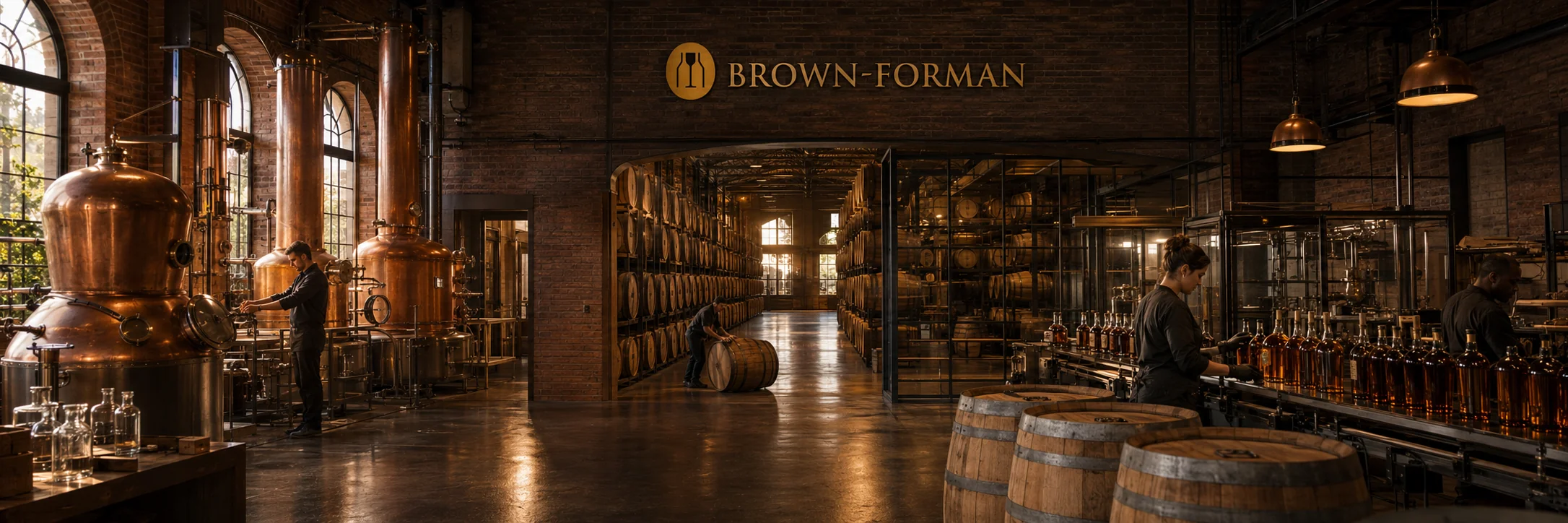
Brown-Forman turns grain, water, yeast, distillation, barrels, warehouses, blending, bottling, and distribution into a beverage with a defined identity and flavor. A volume of new spirit, a barrel count, an age statement, or a brand name cannot establish the final bottle; maturation, evaporation, inventory timing, quality evidence, money, and route to market determine what can be sold.
A drinker does not need a volume of alcohol or a brand name alone. They need a beverage with a familiar identity, proof, flavor, legal description, and availability where they want to buy it. Brown-Forman creates that result from grain, water, yeast, distillation, barrels, warehouses, blending, bottling, and distribution. The product changes materially at every stage, and some stages cannot be hurried without changing what the bottle is.
Brown-Forman's fiscal 2025 Form 10-K describes brands, distilleries, aging inventory, sales channels, and barrel arrangements. A barrel count or a brand's reputation does not establish how much mature whiskey is available, which barrels can be blended, or whether a particular market can receive the finished product. The useful output is a bottle that still matches its physical and legal identity when it reaches a customer.
Grain becomes new spirit
Grain is milled, mashed with water, fermented by yeast, and distilled into a spirit with a defined composition. Distillation concentrates alcohol and separates some compounds, but the clear spirit is not yet the finished whiskey. It must enter a barrel and begin another physical process.
Barrel wood, char, proof at entry, temperature cycles, warehouse position, time, and evaporation change flavor, color, proof, and volume. For bourbon and many straight whiskies, the TTB defines age as the time stored in charred new oak containers after distillation and before bottling. The rule makes age a real legal and physical boundary, but age is not the whole product.
Aging creates a queue that demand cannot skip
Two barrels from the same fill can develop differently because their wood, warehouse location, temperature, proof, and evaporation differ. A blender selects and combines barrels to reach a target profile and volume. Proofing water, filtration, bottles, closures, labels, cases, tax treatment, distributors, and retailers then carry the result to a customer.
The chain has several clocks. Grain and water can be sourced seasonally. Fermentation and distillation run on process time. Aging takes years for a planned release. Glass, labels, closures, warehouse space, and transport run on industrial schedules. A sudden demand increase cannot manufacture mature whiskey immediately without changing the blend, age, proof, or available stock.
Cash arrives on a different schedule
Brown-Forman pays for grain, energy, water, stills, barrels, warehouses, testing, bottling, taxes, inventory, marketing, and distribution long before some aged products are sold. Barrels tie up cash while spirit loses volume through evaporation. A barrel-supply arrangement can therefore affect future production even when a distillery has enough new spirit today.
Payment timing changes what can be done. A producer may need to finance barrels and warehouse space years before a release generates revenue. A distributor or retailer may require promotional terms and inventory that delay cash collection. A tax payment can be due before the final sale. When demand moves toward a particular age or proof, the producer must blend available stocks, change the release plan, or accept a gap; it cannot simply accelerate the maturation clock.
A portfolio of brands can help use different blends and channels, but a shared barrel shortage, glass constraint, or warehouse decision can affect several products. The cheapest input is not automatically the physically suitable one if it changes maturation time, consistency, or legal identity.
Records describe different parts of the bottle
A mash record describes a production batch. A distillation measurement records proof and volume under a defined method. A barrel record identifies a fill date, warehouse, and contents. An age statement communicates a regulated storage period. A label approval concerns the product description and required information. An inventory count reports volume or categories. A sensory panel observes a sample. A sales record reports a transaction. None alone proves the complete history or the customer's experience.
An age statement can be accurate while the blend contains barrels with different locations and evaporation histories. A warehouse count can show volume while some spirit is already committed to a future release. A label can comply with its legal description while a retailer has no stock. The records matter because they support production and release decisions, but they do not substitute for the physical bottle and its route to market.
Controls preserve identity while the spirit changes
Water and grain testing, fermentation control, distillation checks, barrel identity, warehouse monitoring, proofing measurement, bottling inspection, label compliance, tax records, and sensory release address different risks. A quality complaint becomes corrective only when it can be tied to a batch, barrel group, warehouse, package, distributor, or retailer and reaches the team with authority to change the process.
A shared brand can make a change hard to see. A different barrel source, proof, blend, or filtration step may preserve the label while changing flavor or performance in a cocktail. A retailer or drinker may notice a difference before the production record points to its cause. Feedback must travel from the bottle through the distributor and quality team to the barrels, blend, package, or release decision that can change the next lot.
Retirement leaves barrels, glass, and records
A product or facility can be closed while spirit, barrels, labels, contracts, taxes, and customer expectations remain. Mature inventory may be sold through another route, blended into another product, or held until the economics change. Barrels may be reused for another beverage or become a material stream. Glass, closures, and packaging require their own handling.
Brown-Forman is therefore a time-and-transformation system, not a brand count. CompanyGraph can map its distilleries, cooperages, suppliers, warehouses, distributors, retailers, labels, and ownership relationships. It cannot by itself observe a barrel's hidden condition, a sensory drift, a retailer's stock, or the cash authority available to preserve a planned release.
Inside CompanyGraph
The screen below shows companies with the recorded shape of a growing dividend: a multi-year growth rate, a payment streak, and a consistency reading all elevated.
Dividend Growth With Payment Streak And Consistency
Three-year dividend growth rate elevated, dividend-payment streak at or above the configured ceiling, and dividend-consistency composite elevated
Dividend Growth With Payment Streak And Consistency
→dividend consistency
dividend growth rate standard
dividend streak standard
A match records the dividend history, not the board decisions that will set the next one.