 CompanyGraph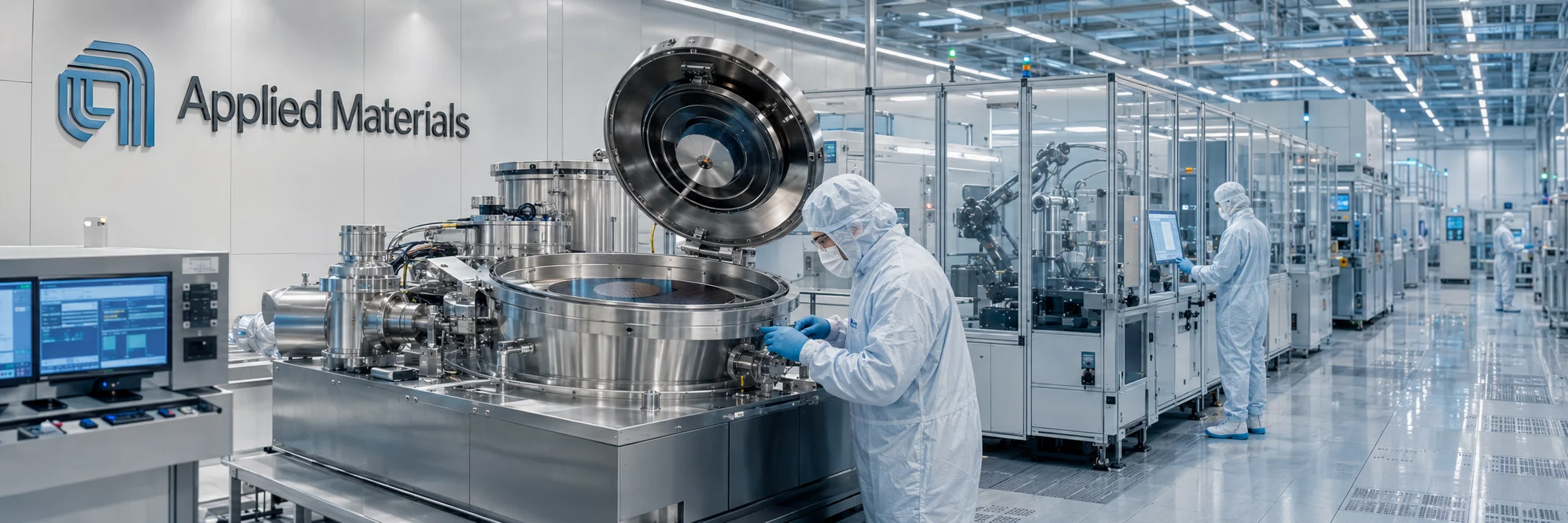
Applied Materials turns tools, materials, process recipes, and service into the repeatable wafer steps on which qualified chips depend.
A fab needs a qualified process step, not a machine count
A semiconductor fab needs to add a film, remove a selected region, flatten a surface, change electrical properties, clean a wafer, or detect a defect. The useful output is not a tool parked on a floor. It is a repeatable process step that produces wafers with the required dimensions, composition, defect level, yield, and reliability.
Applied Materials makes equipment for deposition, etch, pattern shaping, CMP, inspection, metrology, and related semiconductor processes. Applied's product description explains that these systems change and analyze materials on wafers and packages. Its 2025 Form 10-K describes the company and its markets, but installed equipment or capital spending does not establish a customer's qualified wafer output.
Each tool changes wafer material in a different way
Deposition adds a controlled film. Etch removes selected material. Chemical-mechanical polishing flattens a surface. Implantation changes electrical properties. Cleaning removes residues. Inspection and metrology observe defects, dimensions, composition, and overlay. Packaging adds new surfaces, bonds, thermal paths, and tests after wafer fabrication.
These steps are coupled. Gas delivery, vacuum, plasma, temperature, chamber walls, robot handling, consumables, software recipes, calibration, and maintenance history affect the wafer. A tool can be installed and powered while producing no qualified output if its process window, contamination state, or integration evidence is not ready.
Qualification turns equipment into a customer process
A drawing or product brochure describes a tool's intended capabilities. Installation and acceptance test a defined configuration. The fab then runs engineering wafers, tunes recipes, measures results, and compares yield and reliability with its requirements. The same model can therefore perform differently in two fabs because the process, materials, maintenance, and surrounding equipment differ.
Tool telemetry can show chamber pressure, temperature, gas flows, alarms, and cycle history. It cannot by itself show every film property or defect on every wafer. Metrology and inspection add observations, but they sample selected wafers and locations. The customer's process history remains part of the equipment's usable condition.
Capital spending creates a long physical queue
A fab spends before a new tool produces saleable dies. It funds purchase, facility interfaces, installation, cleanroom work, utilities, engineering wafers, qualification, spares, software, and trained staff. Applied funds research, manufacturing, field engineers, parts, and support capacity before the customer's next order is certain.
Timing changes the available action. A delayed tool can hold a process ramp. Rushing acceptance can move a yield problem into production. A spare chamber or upgrade can shorten recovery while tying up cash and engineering capacity. Export rules or restricted service access can leave a tool physically present but difficult to operate or maintain.
The installed base is a second product
Once a tool is in a fab, service contracts, upgrades, consumables, spare parts, software, and field knowledge help keep it within its process window. A replacement pump, chamber part, sensor, or controller can preserve mechanical operation while changing contamination, thermal, particle, or metrology behaviour.
Long-lived mature-node tools can remain valuable because the process they support remains qualified. Newer equipment does not automatically replace them: a fab still needs the correct process step, throughput, yield, customer evidence, and trained staff. Retirement may reflect a changed product, export boundary, or support route before the machine is physically exhausted.
Records observe different boundaries
A purchase order records a commercial commitment. An acceptance test observes a defined configuration. A recipe file states instructions. Tool logs observe machine conditions. Metrology and inspection observe selected wafers. A yield report aggregates lots. A service record describes an intervention. None alone proves the complete process state or the remaining margin in the customer's fab.
A certificate can establish that a tool passed a test while a later contamination event changes its output. A high yield in one lot does not prove long-term reliability. A shipment record establishes custody, not correct installation. A software version can identify the recipe without proving that the chamber, gases, or calibration matched it.
Controls make wafer failures traceable
Contamination control, preventive maintenance, calibration, statistical process control, defect inspection, recipe management, spare parts, service contracts, and export compliance each address a defined risk. They do not make every tool, wafer, or process universally reliable.
Feedback becomes corrective when a wafer failure can be connected to its tool, chamber, recipe, material, operator, lot, and supplier history, then reaches the engineer or service team able to change the next process. If a wafer is scrapped before analysis, a chamber is cleaned without preserving evidence, or the fab and supplier cannot share the relevant records, the next run may repeat the excursion.
Retirement preserves different amounts of work
A transferred tool may preserve process function if its contamination history, configuration, service records, and new-fab qualification remain acceptable. An upgrade may preserve the chamber and facility interfaces while changing the recipe and evidence. Material recovery preserves steel, aluminum, electronics, and vacuum components but destroys the qualified process history that made the system useful.
Applied's position depends on keeping equipment design, process knowledge, service, parts, customer qualification, and field feedback connected. Two questions remain open: how much process knowledge survives when equipment and service are divided across companies and countries, and whether a retired tool can be reused when its qualification history no longer travels with it. CompanyGraph can map tools, fabs, suppliers, service teams, recipes, measurements, and handoffs. It cannot by itself observe hidden chamber contamination, an undocumented recipe change, or which organization still has the money and authority to correct the process.