 CompanyGraph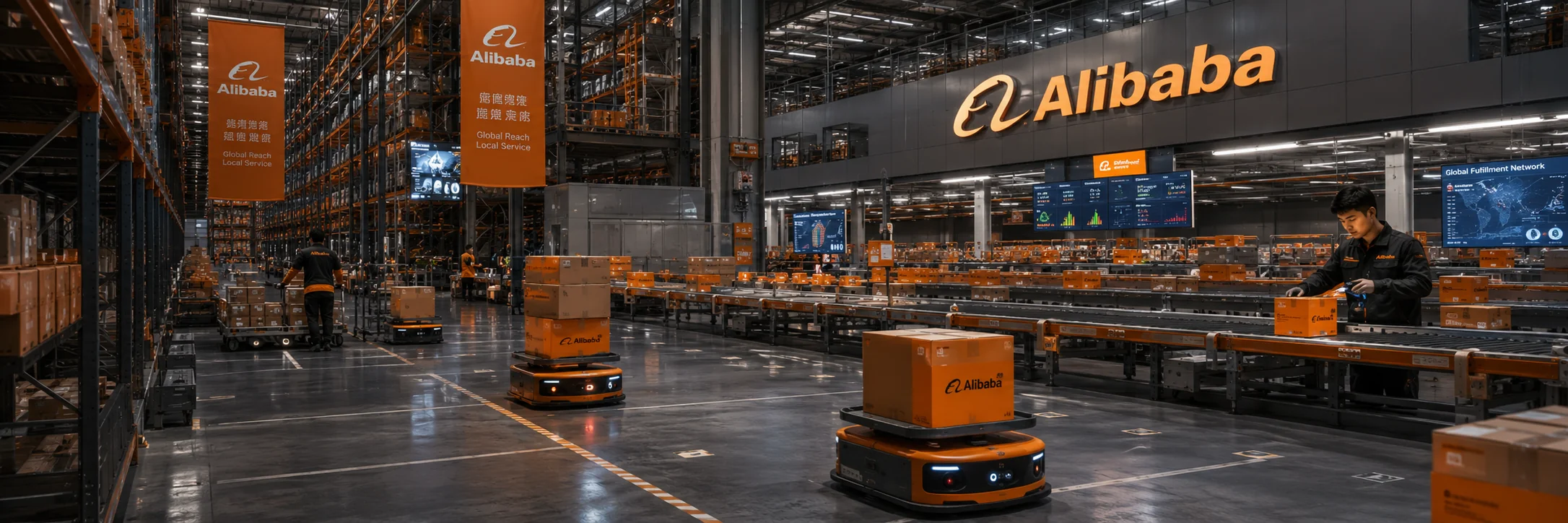
A marketplace works only when a merchant's claim, a shopper's payment, a physical delivery, and a correction path remain connected.
The shopper needs a delivered result
A shopper does not need a listing or a transaction count. The shopper needs the right product to be described honestly, paid for securely, delivered to the right place, and refundable or replaceable when the result is wrong. The merchant needs a way to expose inventory, acquire customers, collect money, and resolve returns. Alibaba coordinates those steps without owning every item or parcel.
Alibaba's fiscal 2025 Form 20-F describes Taobao and Tmall, international commerce, Alibaba Cloud, Cainiao, local services, and an ecosystem of consumers, merchants, brands, retailers, and third-party providers. The filing is a map of platform businesses, not proof that a particular order was genuine, delivered, or useful.
A merchant turns inventory into a claim
Before a shopper can buy, a merchant converts a physical item into a listing: price, photographs, specification, stock status, delivery promise, and seller identity. Taobao and Tmall can rank and display the claim, provide customer-management tools, and record the order. The platform cannot see every item in the merchant's warehouse at the moment the listing is shown.
A listing record establishes what was offered at a point in time. It does not establish that the item is authentic, that the remaining unit has the same condition as the photographed sample, or that the merchant can ship it before the delivery promise expires. Reviews, returns, and disputes provide later evidence, but they arrive after the shopper has already made a decision.
Payment creates an order, not a delivered good
Alibaba's marketplace revenue includes customer-management and software services, direct sales, and logistics services. Merchant deposits and service fees create a financial relationship that is separate from the product's physical movement. A payment confirmation can create an order and reserve an obligation while inventory, courier capacity, customs, and the merchant's cash still determine what happens next.
Alibaba disclosed that an annual upfront service fee was cancelled from September 2024 and that merchant deposits would subsequently be refunded. That change is a concrete example of money altering participation: a deposit held for a platform service can become a liability to return, and a merchant's working capital can change before any product is sold.
Cainiao joins digital demand to physical movement
Cainiao provides express delivery, supply-chain, on-demand, and other logistics services. Alibaba describes it as controlling selected nodes while using trusted partners for scalability and capital efficiency. The Cainiao description shows the coordination problem: the platform can connect an order to warehouses, carriers, customs, and last-mile providers without controlling every handoff.
A tracking scan establishes that a package was observed at a location or event. It does not prove that the parcel contains the right item, that it is undamaged, or that the customer can use it. A delivered scan can coexist with a missing parcel, a wrong address, or a return that has not yet been credited. Correction requires the order identity, carrier evidence, merchant authority, and money to re-ship or refund.
Cloud is another service path
Alibaba Cloud supplies infrastructure, platform, and model services to enterprise customers. The 2025 filing describes public and non-public cloud services, including computing, storage, networks, databases, security, cloud-native tools, and model studio, billed through consumption or subscription. The cloud description is a different physical path from a parcel, even though the same company connects data and commercial demand across them.
A cloud bill records consumed service or a subscription period. It does not prove that an application met its business objective, that data was complete, or that a model's output was safe for a decision. A workload incident may require Alibaba, a customer, a software vendor, or a network provider to change something. The shared platform is useful only when those responsibilities remain identifiable.
Data connects the businesses and creates new obligations
Marketplace interactions can inform search, fraud controls, merchant tools, logistics planning, and customer support. Cloud services can expose computing and AI to customers outside the marketplace. The same data path can therefore improve conversion and create privacy, security, regulatory, and model-governance obligations.
More data does not automatically mean better control. A fraud rule may block a legitimate shopper. A recommendation may favor a merchant whose product is unavailable. An AI service may return a plausible answer with insufficient evidence. The useful feedback is not a dashboard score alone; it is a labeled error, a customer complaint, a failed delivery, or a policy decision that reaches the team able to change the system.
Rules and money decide which merchants remain reachable
Merchants need cash for inventory, packaging, advertising, returns, and platform fees before sales proceeds arrive. A small merchant may have demand but not enough working capital to restock after a return or absorb a delayed payout. A platform rule that changes deposits, ranking, required documentation, or refund timing changes which physical actions remain possible.
Regulation adds another boundary. Local consumer-protection, tax, data, customs, and platform rules can require a listing to change, a merchant to provide evidence, or an order to stop. Alibaba's filing reports a corporate ecosystem and legal structure, but it cannot turn a regulatory requirement into an interchangeable operating procedure across jurisdictions.
What each record can establish
A listing records a merchant claim. A payment record records an order or financial state. A warehouse or carrier scan records a logistics event. A review records a customer's later report. A refund record records a platform response. A cloud usage record records consumed computing or storage. None alone establishes the complete product, delivery, customer outcome, or enterprise result.
Those records become valuable when they can be joined to a correction. A wrong item should reach the merchant and fulfillment path. A fraud signal should reach the risk team. A failed delivery should reach the carrier, seller, and refund authority. A cloud incident should reach the operator and customer with enough evidence to change the workload or infrastructure.
Alibaba is an ecosystem of partial controls
Alibaba's strength is the connection among merchant reach, consumer demand, payment, logistics, data, and cloud. Its scale can reduce duplicated work and make new services available to businesses that could not build them alone. It does not make sellers, parcels, payment states, local rules, and cloud workloads physically identical.
The complete account follows the shopper's need through the listing, order, payment, fulfillment, delivery, use, and return, and follows the merchant or enterprise feedback to the person able to correct the next state. Platform revenue, processed orders, tracking scans, and cloud consumption are useful measurements. They are not the delivered result by themselves.