 CompanyGraph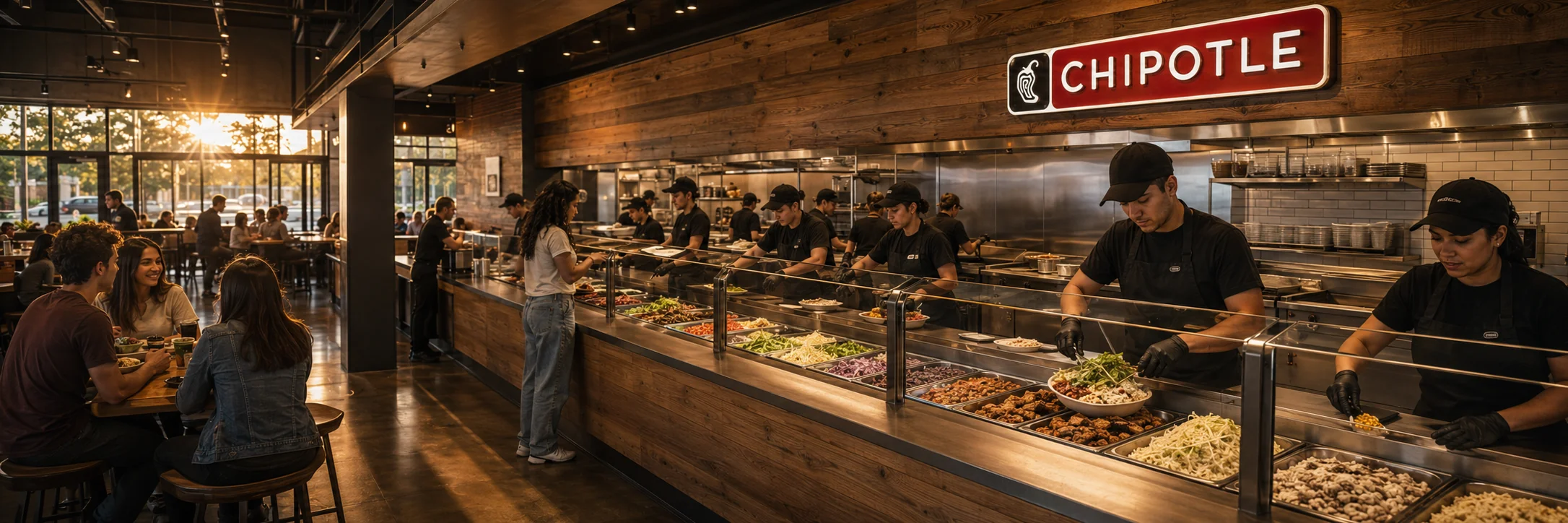
Chipotle turns agricultural ingredients into a safe, customizable meal through supplier standards, cold storage, preparation, cooking, assembly, staffing, payment, and waste handling. A restaurant count, supplier certificate, temperature log, or receipt cannot establish the complete meal; condition, timing, worker capacity, equipment, customer demand, and corrective feedback determine what can be served.
A customer does not need a restaurant count or a transaction total. They need a safe, satisfying, customizable meal served at the time and price they can use. Chipotle creates that result from agricultural ingredients, distribution, cold storage, preparation, cooking, assembly, workers, equipment, payment, and waste handling. The meal is produced at the restaurant, not completed when a supplier ships a box.
Chipotle's 2025 Form 10-K describes company-operated restaurants, supply chain, food safety, labor, digital ordering, and restaurant economics. Its 2025 sustainability report provides bounded information about supplier standards, food safety, water, energy, and packaging. Those records are useful, but none is the meal or the customer's experience.
Ingredients arrive with different clocks
Produce, meat, beans, rice, dairy, spices, packaging, water, and energy come from different suppliers and schedules. Distribution moves them to restaurants where workers inspect, store, wash, cut, cook, hold, and assemble them to customer orders. Fresh ingredients impose short usable windows. A cold-chain failure, delayed delivery, staffing gap, or equipment fault can close one ingredient's window before the menu changes on the screen.
The visible simplicity of a bowl or burrito depends on many preparations already being coordinated. A restaurant must have the right quantities, temperatures, tools, surfaces, storage, and people before the order is placed. Digital ordering adds another route: an app or kiosk can send an order and payment while the line, kitchen, and pickup shelf still handle the physical meal.
An order becomes a meal at the counter
An order ticket records requested items. A prep record reports work completed. A temperature log records a measured condition at a time. A receipt records payment. Each answers a different question.
A confirmed order can still be delayed by a demand peak, missing ingredient, equipment failure, or worker who cannot safely complete the task. A receipt can be accurate while the order is incomplete or an allergen instruction was missed. A temperature log can show a safe reading at one moment while later handling changes the food. The records make the next correction possible, but they do not replace the meal.
Staffing and cash share the service clock
Restaurants pay for ingredients, refrigeration, cooking equipment, rent, labor, training, utilities, packaging, distribution, maintenance, and waste before a meal produces revenue. Customers pay at order time, but a restaurant must staff and stock for peaks that may not arrive and still respond when demand surges.
A manager may buy more fresh product to protect service during a promotion and discard it if demand falls. Fewer scheduled workers can reduce labor cost and create a queue that makes the meal no longer usable for a customer on a short break. A supplier may need forecasting and payment before planting or processing. A customer may choose a cheaper or faster meal even when the ingredient and packaging route differs.
Company-operated restaurants can align procedures and feedback, but they cannot remove local staffing, weather, supplier, or regulatory variation. A low food-cost percentage does not prove that safe holding, equipment, workers, and training were adequately funded.
Controls cover defined food-safety risks
Supplier qualification, sanitation, handwashing, cooking temperatures, cold holding, allergen controls, employee training, equipment maintenance, recall systems, and inspections address different risks. A supplier certificate describes a defined product or audit. An inspection observes a defined visit. A food-safety control can reduce a hazard without detecting every contamination route.
A complaint or illness signal becomes corrective only when it reaches the restaurant, supplier, carrier, food-safety team, regulator, and budget authority able to change the next action. The customer may discover the mismatch first. Correction still requires identity, time, staff, money, and a route to the ingredient or process that caused it.
Waste and closure leave obligations
Food scraps, used oil, packaging, wastewater, and cleaning chemicals leave the restaurant by different routes. A compostable package may still enter a waste stream that cannot process it. A supplier claim may be true for a product while the customer's disposal system produces another result. A closed restaurant can leave equipment, grease, chemicals, leases, records, and workers that require separate handling.
Chipotle is therefore a fresh-food production and service system, not a store or transaction count. CompanyGraph can map its suppliers, farms, processors, carriers, restaurants, workers, payment systems, regulators, customer channels, and waste handoffs. It cannot by itself observe an unrecorded temperature excursion, a local staffing shortage, a hidden allergen exposure, or the authority available to change a meal before service.