 CompanyGraph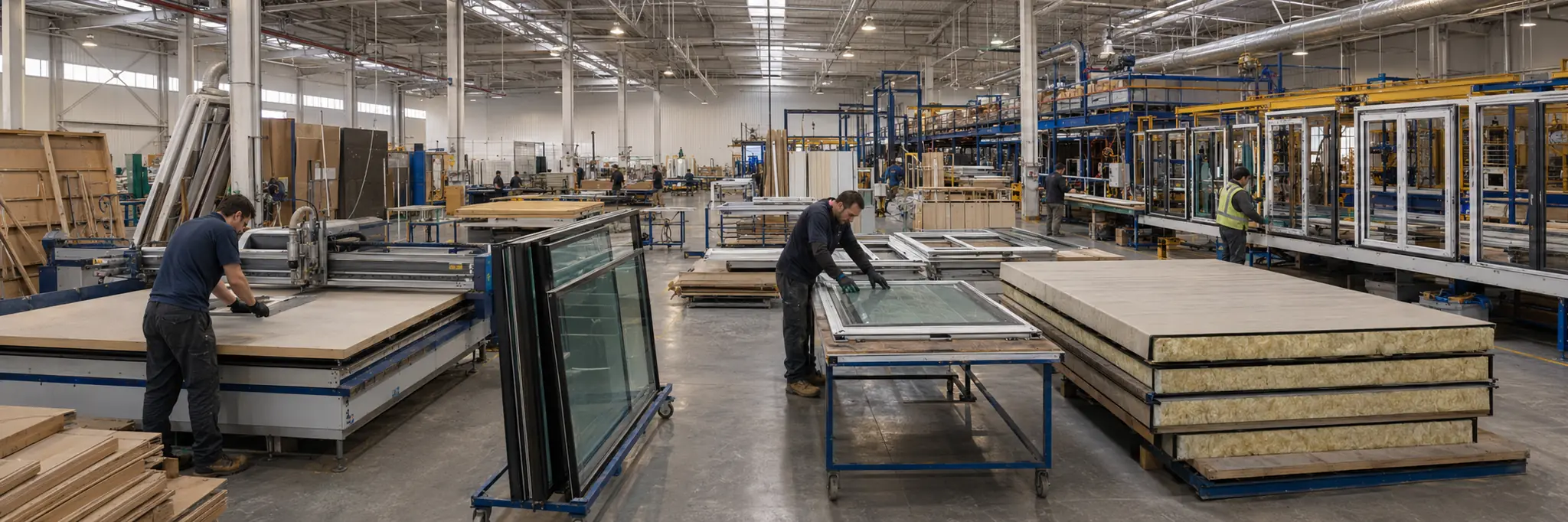
Building energy codes set minimum thermal and moisture performance for the envelope, driving periodic product reformulation, while heavy product weight relative to value forces regional manufacturing for anything that must be shipped at scale.
Building products manufacturers form the passive envelope and interior finish of a building. Roofing shingles and tiles, insulation batts and boards, siding panels, window assemblies, doors, flooring systems, composite decking, and cabinetry are the output. Raw and intermediate materials — fiberglass, asphalt, polymers, wood composites, vinyl, engineered stone, lumber — are converted through molding, extrusion, lamination, and finishing into discrete finished goods that construction trades install during new building or renovation work. The industry sits between bulk building materials (upstream commodity inputs) and building products and equipment (the active mechanical and electrical systems installed alongside the envelope).
Two structural features dominate. First, product weight and bulk relative to value: heavy categories like asphalt roofing, fiberglass insulation, and fiber cement siding cannot be shipped economically across long distances, which forces regional plant networks for any manufacturer operating at national scale. Lighter, higher-value categories — engineered flooring, composite decking, high-end cabinetry — support centralized production with national distribution. Second, specification-driven purchasing: building code compliance, architect preferences, and contractor habit determine product choice before installation begins, and once a product is embedded in standard construction practice it develops real switching costs. This combination produces brand stickiness rare in commodity manufacturing.
Demand divides cleanly between new construction and repair-and-remodel, each with its own drivers. New construction follows housing starts, commercial permits, interest rates, and land availability. Repair-and-remodel follows housing age, storm damage, and homeowner capacity to finance projects. The two channels partially offset: a weak new-build market often coexists with strong renovation demand, and severe weather (hurricane seasons, hail, ice) spikes roofing and siding replacement independent of the construction cycle. Building energy codes tighten on a running multi-year cadence, pulling product mix toward higher-performance specifications (thicker insulation, lower U-factor windows, more stringent moisture barriers) and forcing periodic reformulation that consumes capital but rewards manufacturers with deeper R&D capability.
Structural Role
Sits between bulk material producers upstream (lumber, cement, glass, resins) and construction trades downstream, producing the passive envelope and finish layer of a building. Unlike building materials, the output is a specified, branded, code-certified finished good; unlike building equipment, the output is passive — it does not move water, air, electricity, or people. Product selection is determined before installation by architect specification, contractor habit, or homeowner choice.
Scale Differentiation
Large manufacturers run regional plant networks to keep freight under control on heavy categories and use national brand recognition, contractor training, and distributor relationships to hold specification preference. Mid-size producers compete on material science — proprietary fiber cement, composite formulations, engineered wood alternatives — where product performance substitutes for scale. Smaller manufacturers serve regional markets or specialty niches (custom millwork, regional roofing profiles, local code specializations) where freight, lead time, or local expertise offset cost disadvantages.
Connected Industries
Building Materials
Creates demand for
Consumes cement, aggregates, and glass as manufacturing inputs
Chemicals
Creates demand for
Resins, polymers, and petrochemical inputs for composite and vinyl products
Engineering & Construction
Supplies inputs to
Envelope components for commercial construction
Furnishings, Fixtures & Appliances
Creates demand for
Adjacent finish layer installed alongside building products
Home Improvement Retail
Supplies inputs to
Products sold through retail channels for renovation
Lumber & Wood Production
Creates demand for
Wood fiber and lumber inputs for composite and engineered products
Residential Construction
Supplies inputs to
Roofing, insulation, siding, windows, doors, flooring for homebuilding