 CompanyGraph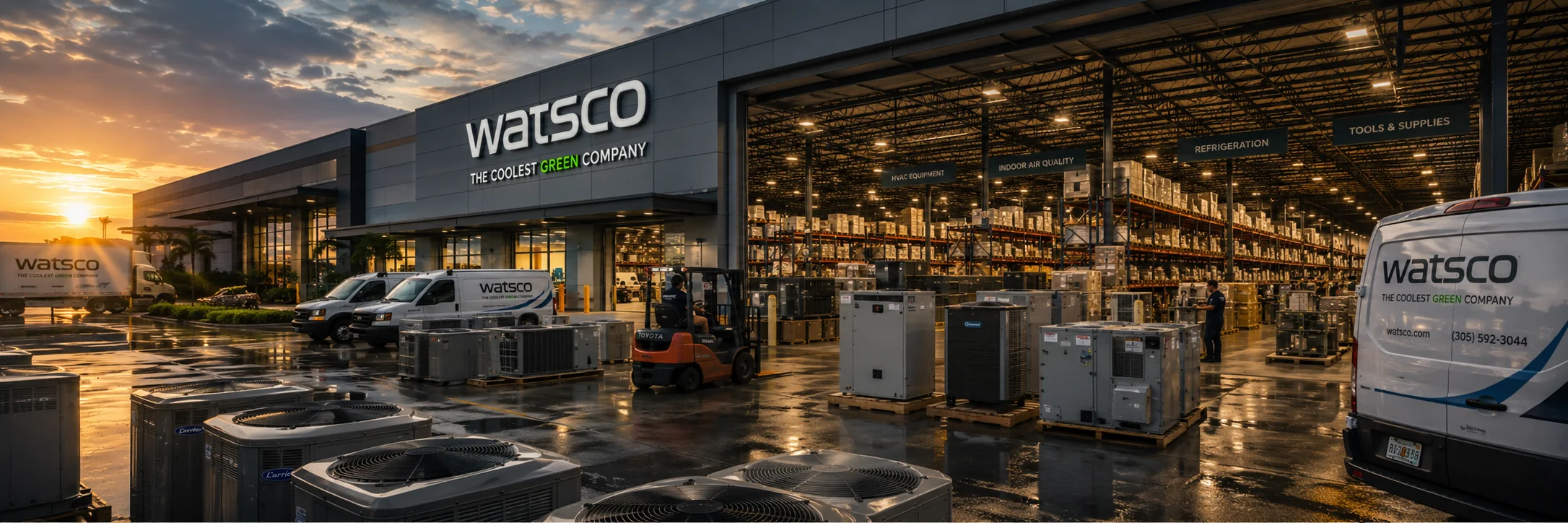
Watsco coordinates HVAC equipment, parts, inventory, branches, manufacturers, contractors, training, financing, and seasonal demand into a working heating or cooling installation. Distribution scale improves availability, but a unit sold is not comfort delivered: site conditions, correct sizing, installation, refrigerant handling, maintenance, and customer payment still decide the result.
Watsco makes heating and cooling equipment reachable by connecting manufacturers, inventory, branches, contractors, training, and seasonal demand before the customer needs a functioning system.
The product is a working installation
A household, store, or factory needs a space kept within a temperature and humidity range. Watsco's 2025 annual report describes its distribution of air-conditioning, heating, and refrigeration equipment and parts. A box delivered to a contractor is an intermediate event. Correct sizing, compatible components, installation, commissioning, and power determine comfort and efficiency.
Manufacturers produce condensers, air handlers, furnaces, controls, refrigerants, and replacement parts. Distributors hold models and move them through branches and warehouses. Contractors diagnose a site, select a system, connect refrigerant and electrical circuits, set controls, and explain maintenance. A part can be in stock while the qualified installer, crane, permit, or compatible component is missing.
Seasonality makes inventory a service
Heat waves and cold snaps create simultaneous demand. Branch density shortens travel and lets contractors respond to breakdowns, while national purchasing spreads fixed costs. But a warehouse full of one model cannot substitute for a shortage of a different efficiency rating, refrigerant, voltage, or control platform. Regulation can also make an older unit unavailable even when it is physically intact.
Money decides which repair is reachable
Watsco finances inventory, branches, trucks, training, systems, and customer credit before a contractor is paid by a building owner or household. Contractors finance labour, tools, refrigerant, insurance, and callbacks. A customer may choose a cheaper repair because a full replacement cannot be financed today, even when the replacement would reduce energy use over time.
Manufacturers and distributors also manage seasonal stock and obsolescence. A price concession can clear inventory but make specialized training, parts, or warranty support harder to sustain. The invoice records a unit and terms, not the total money needed to make the installation reliable.
Records observe different boundaries
A product label identifies a model. A warehouse record shows stock. An invoice records a sale. A commissioning sheet records selected settings. A utility bill observes later energy use. None alone proves correct sizing, refrigerant charge, airflow, comfort, or safe maintenance.
Correction needs equipment model, serial, site, installer, settings, refrigerant, weather, complaint, and service history to remain linked. A callback may reveal installation error; a recurring failure may require a design or parts change; high energy use may require commissioning rather than a new unit.
Distribution has a practical boundary
Online marketplaces, manufacturer-direct sales, local wholesalers, and contractor-owned stock can replace some distribution work. Watsco's durable role comes from combining local availability with technical support and manufacturer access. The route succeeds only when the box, the installer, the building, and the household's money meet before the next temperature extreme.
Inside CompanyGraph
The screen below shows the statement shadow of velocity-run distribution: receivables, inventory, and payables turnover all in the upper portion of their ranges.
Three Turnover Ratios Elevated
Sales-to-receivables, COGS-to-inventory, and COGS-to-payables ratios all sit high on their mapped scales
Three Turnover Ratios Elevated
→inventory turnover
payables turnover
receivables turnover
A match records turnover ratios, not assortment quality, availability, or the supplier terms behind them.