 CompanyGraph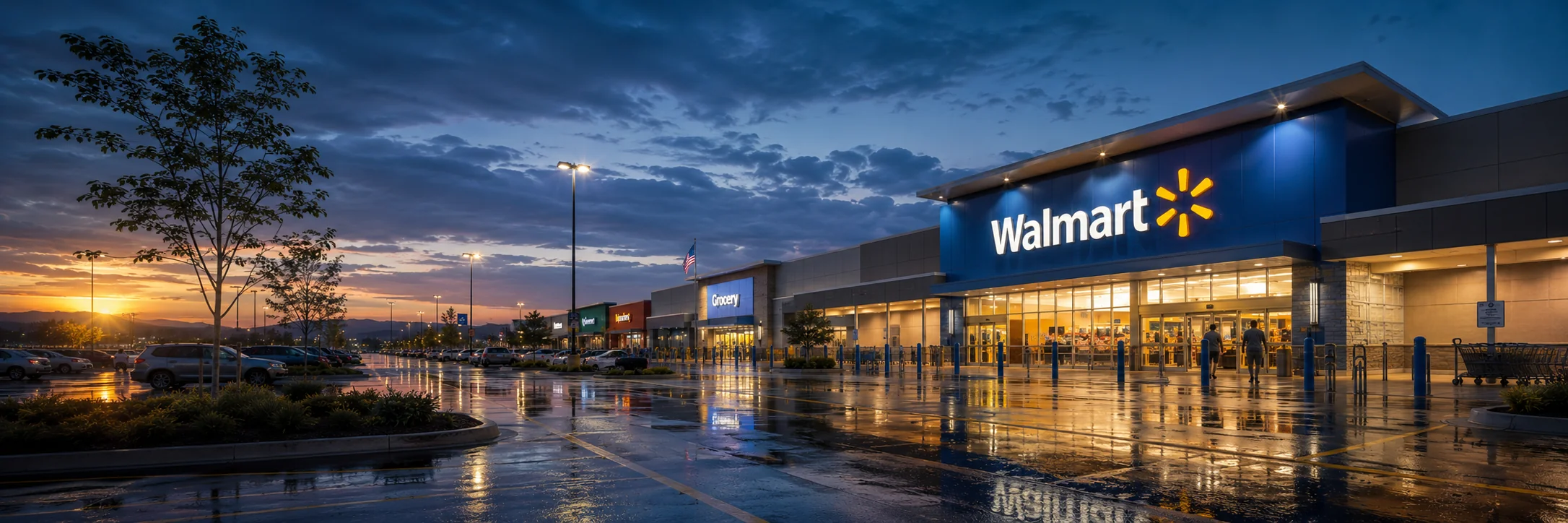
Walmart connects suppliers, inventory, distribution centers, stores, e-commerce systems, workers, and household budgets into a retail service. Scale and density can lower prices and shorten distance, but a sale or stock count does not establish that the right good was available, affordable, fresh, or usable at a particular time.
Walmart makes everyday goods reachable by coordinating suppliers, distribution, stores, workers, digital ordering, and household budgets at enormous scale.
The useful output is an available purchase
A household may need food, medicine, clothing, a tool, or a replacement part at a particular time and price. Walmart's 2025 annual report describes stores, e-commerce, suppliers, and global operations. Revenue and store counts show reach; they do not establish that the right item is in stock, fresh, affordable, or accessible to a customer with limited transport.
Products move through supplier plants, ports, distribution centers, stores, and last-mile routes. Forecasts convert uncertain demand into orders. Cold chains and shelf rotation protect perishables. Store workers receive, stock, pick, and substitute items. A product can exist in national inventory while a local shelf is empty or a delivery slot is unavailable.
Scale lowers some costs and creates queues
Large purchasing volumes can improve supplier terms and spread fixed distribution costs. Store density can shorten travel and support frequent replenishment. But a promotion or weather event can empty a local node faster than trucks can replenish it. A full distribution center may be unable to solve a store stockout if the bottleneck is labour, a trailer, refrigeration, or a supplier's production line.
Money makes low prices possible
Walmart pays suppliers, leases facilities, carries inventory, runs stores, and pays associates before the final customer transaction. Suppliers may wait for payment while financing materials and labour. A small supplier can accept a large order and then struggle with working capital, packaging, or a quality hold. A low shelf price may improve access while leaving little margin for redundancy or local service.
Households face their own boundary. A larger pack can be cheaper per unit but impossible to buy today. A delivery fee can turn an affordable item into an unreachable one. The retailer's price and the customer's ability to pay are related but not identical measurements.
Evidence follows the product and the person
A purchase record establishes a transaction. A warehouse scan establishes a movement. A temperature log observes exposure. A freshness date states a defined shelf-life condition. None proves that a household stored the food correctly, received the right substitution, or could use the product safely.
Correction needs supplier, lot, distribution center, store, order, customer, and use context to remain connected. A recall may require a supplier and retailer response; a stockout may require forecasting or labour changes; an affordability problem may require pack size or payment changes. Sales growth cannot answer all three.
Everyday scale has a boundary
Local grocers, wholesalers, marketplaces, pharmacies, and direct suppliers remain alternatives with different prices and distances. Walmart's advantage depends on maintaining a route from supplier capacity to a local purchase without losing quality or affordability along the way.
Walmart's story is therefore about making ordinary goods reachable through a dense operating system. Scale is useful only when inventory, workers, suppliers, and household money meet at the shelf or doorstep.
Inside CompanyGraph
The screen below shows the statement shadow of velocity-run distribution: receivables, inventory, and payables turnover all in the upper portion of their ranges.
Three Turnover Ratios Elevated
Sales-to-receivables, COGS-to-inventory, and COGS-to-payables ratios all sit high on their mapped scales
Three Turnover Ratios Elevated
→inventory turnover
payables turnover
receivables turnover
A match records turnover ratios, not assortment quality, availability, or the supplier terms behind them.