 CompanyGraph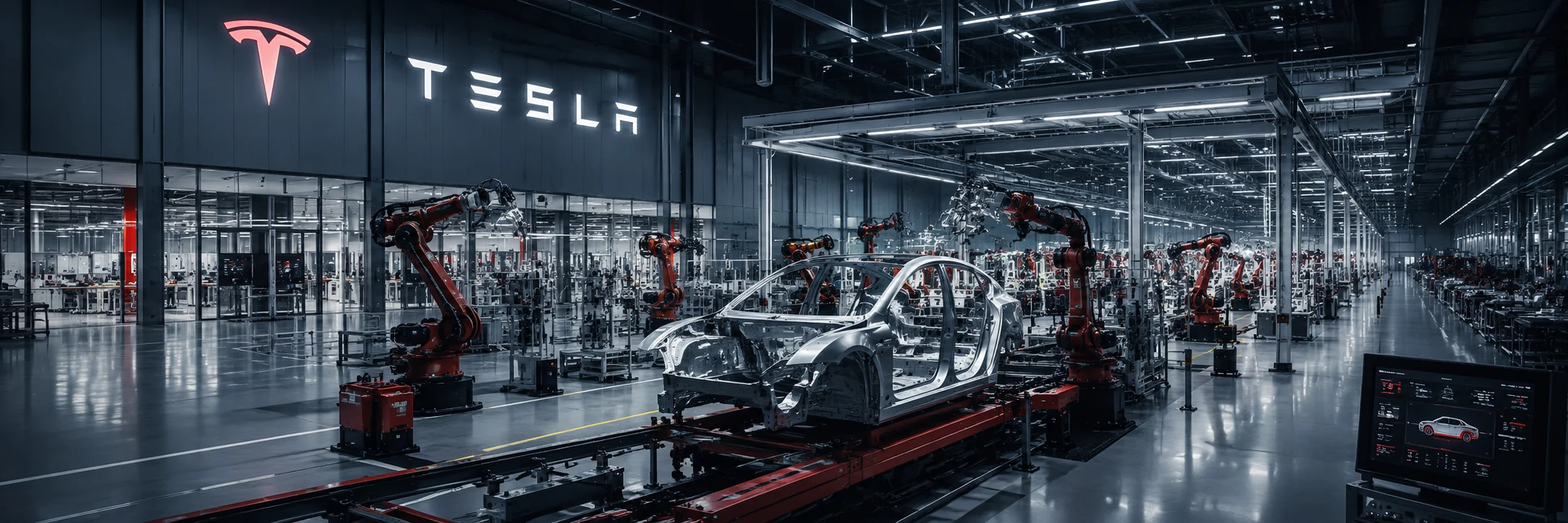
Tesla's product is not only a car. It is a vehicle, battery, software configuration, charging route, service network, and owner experience that must work together over time.
An electric vehicle carries several histories
Cells become modules and packs with thermal management, sensors, software, and safety controls. The vehicle adds motors, power electronics, body structures, driver interfaces, and charging standards. Factory tests establish a released configuration; daily fast charging, temperature, road damage, and updates create a later service history.
Tesla's 2025 Form 10-K describes automotive, energy generation and storage, charging, software, and service operations. Deliveries and installed capacity show scale; they do not establish a driver's range, charger access, or repair outcome.
Factories do not remove qualification
Cells, castings, drive units, software, and final assembly have different yields and suppliers. A new plant can have nameplate capacity while ramping quality, tooling, labour, and logistics. A software release may add capability while creating compatibility or safety testing work across a mixed fleet.
Money determines the mobility path
Manufacturing plants, charging sites, service centres, spare parts, and battery warranties require capital before usage revenue arrives. An owner needs insurance, financing, electricity, tyres, repairs, and sometimes a home charger. Tesla can spread a software fix across a fleet, but the owner still needs a local repair or safe charging route.
Data is not condition
A delivery record establishes a vehicle sale. Battery telemetry reports a measurement. A software version identifies a configuration. A service invoice records work. None alone proves remaining battery life, crash safety, or the driver's experience. Correction requires vehicle identity, battery history, software, location, fault, and authority to act.
Tesla's durable pattern is the connection of manufacturing and software feedback. Its limits appear where the digital platform stops at a charger, a damaged pack, a service queue, or a road that the fleet data cannot see.
Inside CompanyGraph
The screen below shows companies currently in the recorded posture this story turns on: capital spending elevated against operating cash flow and running above depreciation, capital committed ahead of its returns.
Industry-Benchmarked Capex/OCF Elevated And Capex Above Depreciation
Two observations co-occur: industry-benchmarked Capex/OCF in elevated range, and Capex/Depreciation ratio above 1.0
A match shows the spending pattern, not whether the spending is building advantage or chasing it.