 CompanyGraph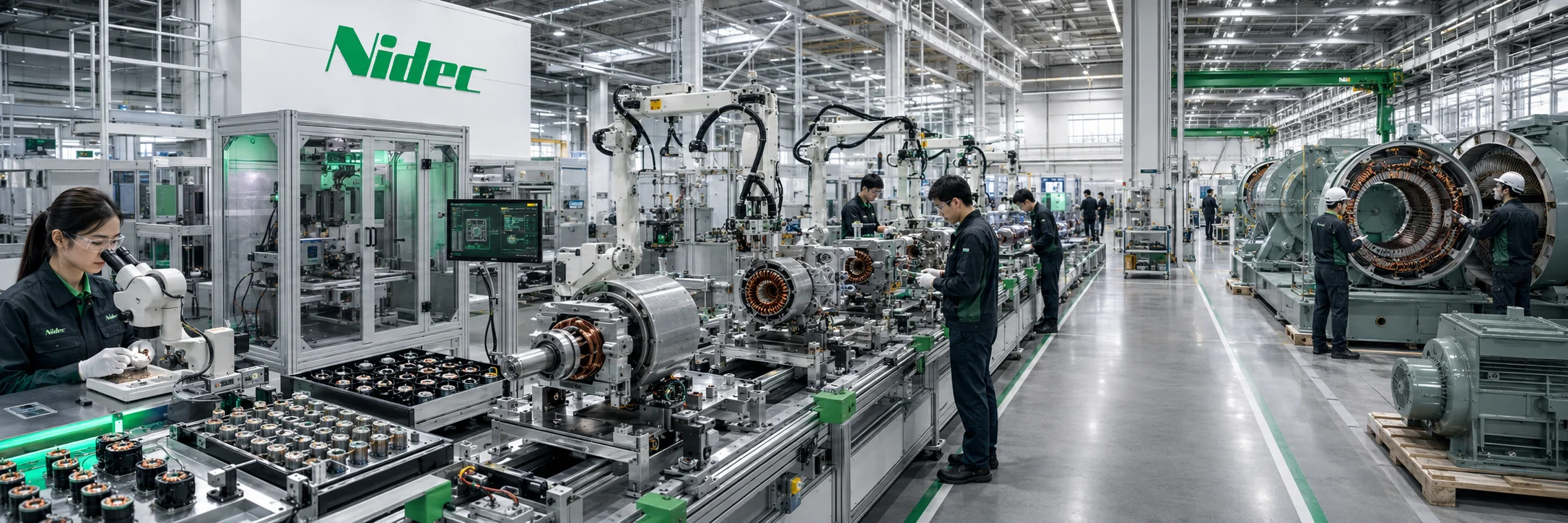
A motor is not a generic spinning object. It is a qualified way to produce motion inside a particular machine.
The supplied function is controlled motion
An air conditioner needs a compressor motor with one load profile. A hard-disk drive needs a spindle motor with another. An electric vehicle, robot, pump, elevator, or appliance needs its own combination of torque, speed, noise, heat, efficiency, size, and control. The motor's value appears only when those properties fit the machine and its duty cycle.
Nidec built its business around the idea that everything that spins could become an application. The insight was not that every motor is the same. It was that motor physics, manufacturing, control electronics, and customer qualification could be learned and reused across many end markets.
From materials to a qualified motor
A motor joins magnetic material, copper windings, a rotor, stator, bearings, housing, insulation, sensors, and controls. Manufacturing must control dimensions, balance, winding, bonding, heat treatment, noise, and electrical performance. A working unit is then tested in conditions related to the customer's machine.
A production line can make motors while lacking the process, supplier, software, or test fixture needed for a new design. A customer design win can create years of demand, but it also commits the supplier to quality, service, and replacement parts for the life of the machine.
From HDDs to electrification
Hard-disk spindle motors once provided large volumes and demanding tolerances. As storage moved toward other architectures, that route weakened. A broad portfolio created other places for engineering, factories, and customer relationships to be used, though each new application still needs design work, tooling, validation, and a customer commitment.
Electric vehicles, heat pumps, industrial automation, robotics, and efficient appliances all use motors, but the opportunity is not simply a count of machines. EV traction motors need power density and thermal control; industrial motors may prioritize continuous duty and serviceability; consumer motors may prioritize cost and compactness.
Nidec's investor-relations materials describe its motor businesses and current financial results across automotive, appliance, industrial, and electronics applications. That establishes breadth and direction, not a guaranteed design win.
Money arrives before volume
Tooling, test equipment, engineering teams, plant capacity, materials, and inventory must be funded before an OEM's vehicle or appliance reaches volume. A customer may require a lower price or new qualification while the supplier is still carrying development cost. An acquisition can buy application knowledge faster, but integration adds systems, plants, staff, and obligations.
A supplier with cash can hold magnets, build a second line, or qualify a backup source. A supplier paid late or hit by a sudden demand drop may delay maintenance or capacity even when the next program requires it.
Records follow the motor into the machine
A test report describes a motor under defined conditions. A customer approval records a design and process at a point in time. A shipment record shows a unit moved. A warranty claim shows what happened later. These records become useful when motor identity, lot, software, machine, load, and environment remain connected.
When a motor fails, correction may belong to Nidec, a bearing or magnet supplier, the OEM, the control designer, or the service team. If the history is lost, the industry can see a failure without knowing whether to change the winding, material, controller, or operating instruction.
What Nidec actually maintains
Nidec's durable capability is the connection between motor physics, application knowledge, manufacturing, qualification, and service across many machines. Breadth helps move from a declining application to a growing one, while the physical requirements of each customer keep the route specific.
The long-term story is not that electrification guarantees growth. It is that more machines create more possible motor routes, and Nidec must still finance, qualify, manufacture, and support the exact motor each route can use.