 CompanyGraph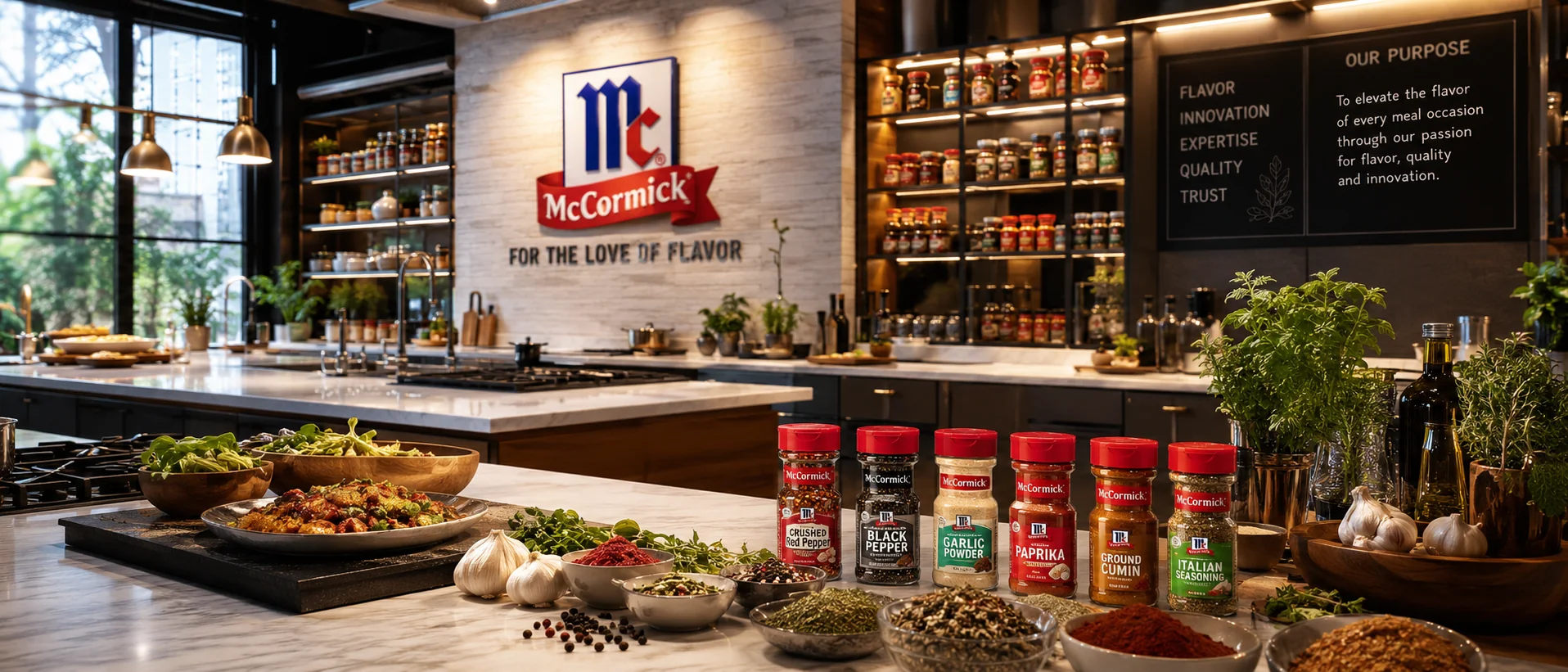
A jar of spice is small, but the flavor it supplies depends on a crop, a quality decision, a process, a shelf, and the meal or product that uses it.
The customer buys a flavor function
A cook may need heat, aroma, color, salt balance, or a familiar taste. A food manufacturer may need a seasoning blend to disperse consistently, survive processing, meet a label, and reproduce the sensory result consumers expect. The customer is not buying a botanical name alone; it is buying a performance in a recipe.
McCormick says it operates Consumer and Flavor Solutions segments spanning spices, herbs, recipe mixes, condiments, flavorings, coating systems, ingredients, and branded foodservice products. The range shows why household and industrial flavor routes are related but not interchangeable.
A crop arrives with variation attached
Spices and herbs come from agricultural systems with different harvest seasons, weather, soils, pests, labor, and drying practices. Moisture, maturity, contamination, essential-oil content, color, and particle size affect what a processor can make. A supplier can meet a written specification while the finished blend behaves differently in a new recipe or storage condition.
Sourcing therefore requires more than finding a low-cost crop. It requires supplier relationships, sampling, testing, cleaning, grinding, blending, storage, and contingency plans. A lot certificate observes a sample under a test method. It does not establish every particle in a shipment or the sensory result after another manufacturer cooks it.
Low price changes attention, not the supply route
A small jar is a minor part of a grocery bill, so many shoppers choose a familiar product without comparing every cent. That can support brand recognition and shelf persistence. It does not make the underlying ingredient cheap to produce or guarantee that a retailer will keep the right size and blend in stock.
Money arrives at several boundaries. Growers and processors need payment before the next crop and quality work. Retailers want inventory that turns without excessive waste. A food manufacturer may pay for testing, formulation, and approval before a new blend generates sales. A customer may choose a store brand when the price difference matters, or keep the branded product when a failed flavor would cost more than the premium.
The shelf is a decision environment
Packaging communicates identity, use, origin, allergens, and care. Shelf position and category assortment determine what a shopper sees. Retailers use sales and inventory data to decide facings, promotions, and replacements; manufacturers use their own data to forecast demand and manage replenishment.
A shelf record shows that a product was allocated. A sale shows that someone bought it. A complaint can reveal a broken seal, wrong flavor, or missing product. None establishes how the spice was stored at home or whether the final meal matched the customer’s expectation. Correction can belong to the package designer, processor, retailer, or household depending on where the failure occurred.
Flavor Solutions enters the factory
McCormick describes Flavor Solutions as serving food manufacturers, foodservice operations, and restaurants with flavorings, branded foodservice products, condiments, coating systems, and ingredients. The industrial customer is buying a controlled input to a larger product. Once a seasoning is formulated into a snack, sauce, or prepared meal, changing suppliers can require new samples, sensory trials, label review, allergen checks, process tests, and customer approval.
That creates a different kind of stickiness from a red cap on a supermarket shelf. The supplier’s knowledge of the customer’s process can reduce risk, but the formulation still has to work at the factory and in the final product. A specification or approval record cannot prove that every production run, oven, fryer, or storage condition will produce the same taste.
Acquisitions extend a flavor route
Acquiring an adjacent brand can add products, distribution, suppliers, and consumer recognition. The capabilities are useful when they share a customer occasion or channel. They still need integration of quality systems, production, procurement, packaging, and information without erasing the identity that made the brand valuable.
A purchase agreement records ownership. It does not establish that the acquired source, factory, retailer, or recipe remains compatible with every existing product. Integration is complete only when the next shipment, label, blend, and customer response can be controlled by people who still have the relevant information and budget.
Quality failures travel backward
A foreign material, contamination event, crop shortage, wrong blend, or sensory complaint can first appear in a kitchen or factory. Investigation may require lot codes, samples, supplier records, processing settings, warehouse conditions, formulation history, and the final product’s cooking or storage path.
The signal is not the correction. A retailer can remove stock; a processor can change a cleaning or blending step; a grower can alter harvest or drying; a food manufacturer can reformulate; a household can discard or replace a product. The action is materially possible only when the responsible party has money, authority, and enough identity preserved to find the cause.
What McCormick actually maintains
McCormick maintains connections among crops, processors, flavor specifications, brands, retailers, food manufacturers, and final users. Consumer products reduce search in a low-attention aisle. Flavor Solutions can become part of a customer’s production system. The same company remains exposed to weather, contamination, commodity costs, payment timing, and changing cooking or formulation practices.
The result is not a jar count or a familiar label. It is the expected flavor function reaching a meal or product in a condition the user can trust. That function remains available only while material identity, quality evidence, money, and corrective authority travel far enough through the chain to change the next batch.