 CompanyGraph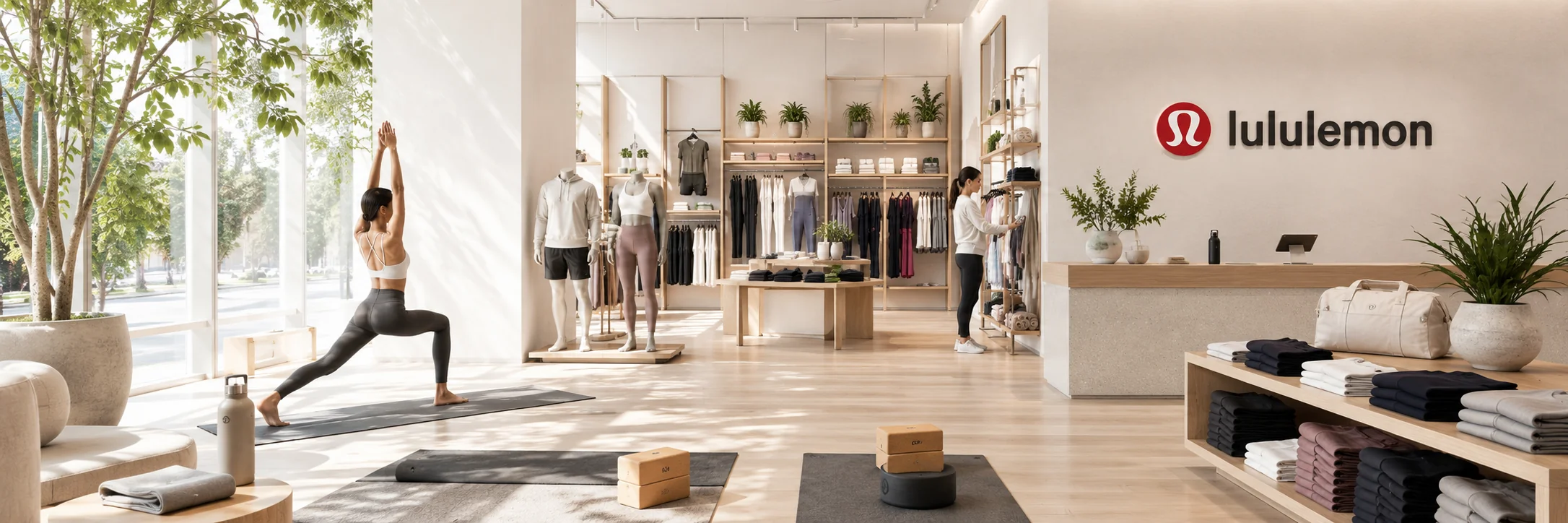
A garment earns a place in someone’s routine when its fit and function work in motion and the surrounding store, community, and price make wearing it feel possible.
The customer needs movement, not a logo
An athletic garment has to fit a particular body, permit movement without unacceptably restricting it, manage heat or moisture as required, and remain wearable through washing and repeated use. The same fabric can perform differently under a yoga pose, a run, a strength workout, or ordinary commuting. The useful result is not a roll of fabric or a SKU; it is a garment that works for the activity and person who chose it.
lululemon describes its business as technical athletic apparel, footwear, and accessories for yoga, running, training, and other activities. The description identifies product categories, not a universal customer experience. Fit, construction, care, price, availability, and social meaning still determine whether the garment enters a person’s life.
Direct retail keeps the customer route visible
lululemon sells through company-operated stores and digital channels. A store can control lighting, product presentation, fitting, staff training, and the moment when a customer compares one garment with another. Online ordering extends access but shifts more of the fit and care decision to photographs, descriptions, reviews, and returns.
That control has a cost. Rent, staff, inventory, fulfillment, returns, and markdowns arrive before a garment produces a margin. A wholesale partner could provide reach with less fixed retail cost, but would also control some presentation and customer data. The choice is therefore an operating trade-off, not proof that one channel is universally superior.
Community turns use into information
lululemon says its relationships with guests and ambassadors, in stores, online, and at local events, are part of its community approach. Ambassadors bring local practice and credibility into the brand route. A yoga instructor or runner can reveal a use case, fit problem, or durability complaint that a sales dashboard would not explain.
Community activity does not guarantee loyalty. It can create a place to test products, learn language, and make the garment socially legible. It also has to be funded, staffed, and adapted across cities and cultures. A digital campaign can reach more people, but it may not preserve the local knowledge that made the original relationship useful.
Technical claims need a body and an activity
Stretch, hand feel, opacity, drying behavior, seam placement, and durability are experienced by a wearer under particular conditions. A fabric specification or laboratory test establishes a defined property under a defined method. It does not establish that every body will find the garment comfortable or that the same property will remain after years of washing.
Product development can connect feedback to a new material, pattern, or construction. A premium is easier to sustain when the customer can feel a difference and understand what problem it solves. But a technical story can become decorative if the garment’s fit, quality control, or availability fails. The 2013 recall of sheer yoga pants showed how quickly a product condition could become a brand and leadership problem.
Inventory makes the premium financially real
Seasonal apparel must be designed, ordered, manufactured, transported, allocated, and sold before the company knows exactly which colors, sizes, and styles customers will want. Too little inventory creates lost sales; too much creates markdowns that weaken the price signal. Owned retail gives lululemon more control over that decision while putting the inventory risk directly on its balance sheet.
A customer’s money also arrives on a different clock from the product decision. A premium garment may be reachable for someone who values fit and durability but not for someone whose budget is fixed. A sale, financing option, or lower-priced alternative can change what the customer chooses without changing the physical quality of the garment. Price is one boundary of the route, not a verdict on the wearer’s priorities.
Expansion tests whether the relationship travels
lululemon’s 2025 year-in-review reports $11.1 billion in revenue, 44 net new company-operated stores, and its first store in Italy. The expansion shows the scale of the direct retail system. It does not prove that a Vancouver-origin community or product language will carry unchanged into every market.
International growth requires local staff, local activities, different body and climate assumptions, new suppliers and logistics, and a way to interpret feedback without making the brand generic. Category expansion into men’s apparel, running, training, and lifestyle products can spread fixed knowledge across more uses. It can also stretch the identity that made the original product credible.
Records observe different parts of use
A material test observes a sample. A product label communicates composition and care. A stock record observes expected inventory. A sale shows a transaction. A return shows that a customer brought something back. A review or complaint offers a signal about use. None alone establishes that the garment fit, performed, and remained wearable for the intended activity.
Correction requires the signal to reach whoever can change the pattern, fabric, supplier, inspection, training, store explanation, or return policy. The customer may be the first person to notice the problem, but not the person with authority or money to correct it. A community route is valuable partly because it can shorten that distance when the information is preserved rather than reduced to a rating.
What lululemon actually maintains
lululemon’s system joins a physical garment to a direct channel, a community, and a feedback route. Technical products can justify attention; stores and ambassadors can make the product meaningful; customer responses can inform what comes next. The same system carries fixed retail costs, inventory exposure, supplier risk, and the possibility that a community becomes diluted by scale.
The result is not a logo or a margin percentage. It is clothing that a person can use confidently for a particular activity and continue to obtain, care for, replace, or question. That function remains available only while product quality, price, access, trust, and correction stay connected.
Inside CompanyGraph
The screen below shows companies whose recorded margins are elevated at all three levels - industry-benchmarked gross, operating, and net - the statement shadow of the pricing power this story describes.
Three Margin Ratios Elevated Across Gross, Operating, And Net Levels
Industry-benchmarked gross margin, operating margin (mapped against own scale), and industry-benchmarked net margin are all in elevated ranges
A match records current margins, not their durability or the mechanism that produced them.