 CompanyGraph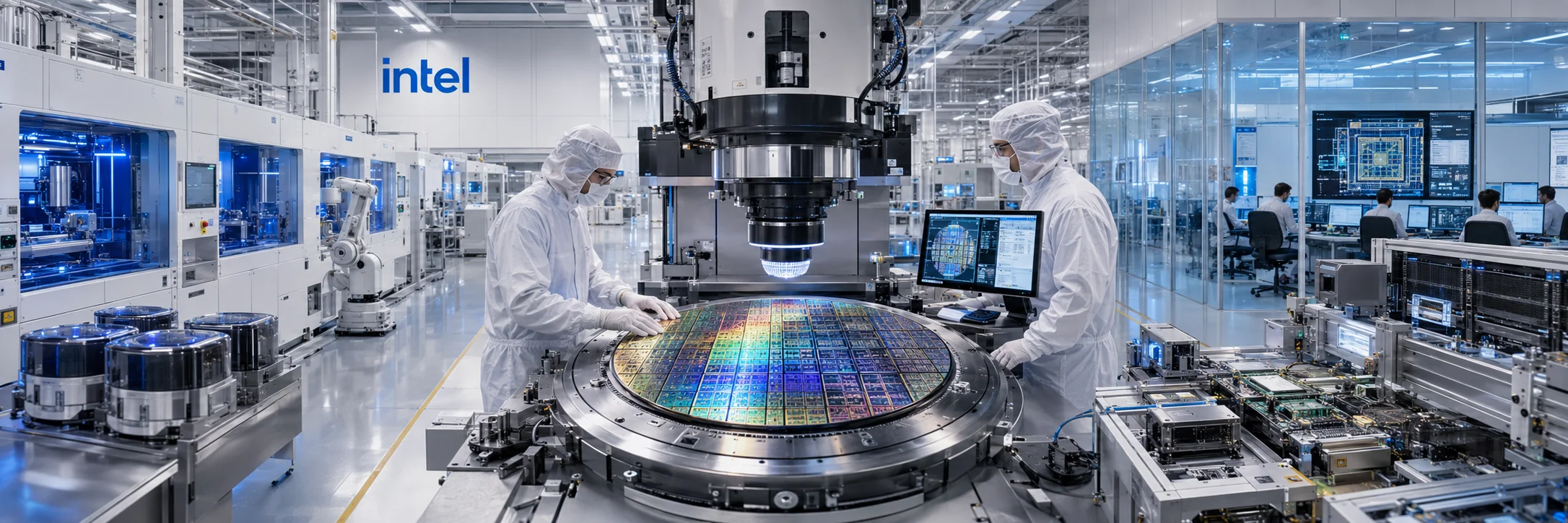
Intel's product is not a transistor count. It is a processor that a system can buy, power, program, manufacture, and support without breaking the software and hardware around it.
A processor starts with a compatibility promise
A personal computer or server customer needs more than silicon. The processor must run the intended operating system and applications, communicate with memory and peripherals, meet a performance and power target, and arrive in a qualified product. A new instruction set can be technically elegant and still be difficult to adopt if customers must rewrite software or replace tools.
Intel's 8086, released in 1978, began the x86 family. Intel describes x86 as a family whose continuing compatibility helped make it the foundation of much personal-computer and server software. Compatibility did not make every later chip successful, but it gave developers and buyers a reason to treat the next generation as an extension of an existing investment.
Integrated design and manufacturing reinforced one another
For much of the PC and server era, Intel designed processors and manufactured a large share of them in its own factories. That arrangement connected a product roadmap to a process roadmap. A smaller transistor, a faster interconnect, or a new packaging choice could become a product advantage if the factory could deliver it at the required yield and volume.
The connection also concentrated risk. If a process slipped, the product schedule could slip with it. If a design did not use the process well, expensive manufacturing capacity could wait for a better product. A fab's clean rooms, equipment, process recipes, trained staff, and supplier network were not generic capacity that could instantly make any design. Each node had to be developed, qualified, ramped, and matched to a design and its test requirements.
This model helped Intel turn x86 continuity into a regular product cadence. It did not make manufacturing superiority permanent. Competitors could separate design from fabrication, use specialist foundries, and choose a process that fit their design without owning the entire capital burden.
Mobile computing changed the constraint
A desktop or server can draw more power, use a larger cooling system, and remain connected to a mains supply. A phone or tablet cannot. Mobile systems reward energy per task, integration, standby behavior, radio and graphics efficiency, and rapid system-level iteration. The x86 software advantage was less decisive when the device and operating system were built around a different instruction set and a battery-sized power budget.
This was not simply a story of one architecture defeating another. It was a change in what the customer needed. Intel's manufacturing and PC strengths did not automatically supply the mobile function, and a chip that was fast in a benchmark did not necessarily provide the required battery life, modem integration, or design flexibility.
A leading-edge node is a qualified route, not a label
Intel's 2025 Form 10-K says Intel 18A entered high-volume production in late 2025. It identifies RibbonFET gate-all-around transistors and PowerVia backside power delivery as the node's principal technologies, and says the process is intended for Intel products as well as government and commercial foundry customers. Those statements describe a process and a production ramp, not a guarantee that every customer's design will qualify.
A foundry customer needs more than wafer space. It needs a process-design kit, design rules, verified intellectual property, electronic-design-automation support, packaging, test, yield data, confidentiality, and a route for correcting defects. Intel's filing says its Foundry offer includes wafer fabrication, advanced packaging, chiplet integration, and design enablement, and also says Intel had few external customers to date. Earning trust therefore requires repeated deliveries at the promised quality and timing, not only a successful demonstration wafer.
Foundry economics begin before the first shipment
Building or converting a fab requires capital before customer revenue is secure. The customer, meanwhile, wants evidence that the process, tools, packaging, and supply route work before committing a product that may ship for years. Intel's internal-foundry description emphasizes service levels, process-design kits, and ecosystem enablement because an external customer must be able to design for the process before it can place a production order. This is a financing and qualification problem as much as a manufacturing problem.
A process can be technically available and commercially unreachable if the customer cannot afford a redesign, if the tools are immature, or if expected volume is too small to justify the transition. Intel can spend on capacity before a customer is ready; a customer can wait for proof while the factory needs volume. The interval is where cash, government support, supplier commitments, and management patience become physical conditions of the strategy.
Records describe a route, not the whole chip
A design file identifies an architecture and revision. A process-design kit records assumptions about how that design should be laid out. A wafer map records test results and die locations. A package label identifies a product and lot. A customer qualification report records the conditions under which a system accepted the part. These records are essential, but each observes a different boundary.
None alone proves how a chip will behave in a customer's full system after months of thermal cycling, software updates, or a change in surrounding components. The first useful signal may come from a data center, an engineer, or a field return rather than from the fab. Correction then has to travel backward through product engineering, process control, supplier quality, packaging, firmware, and customer support.
The x86 legacy remains an option, not a guarantee
Intel's compatibility base still matters because customers have software, staff, operating procedures, and procurement systems built around it. But those assets do not make every x86 product competitive, and they do not prevent customers from using accelerators, custom silicon, or other architectures where the workload rewards them. Compatibility lowers one migration cost; it does not remove power, price, performance, or supply constraints.
The same is true of manufacturing. Intel's 18A progress can restore a capability if yield, product performance, packaging, customer tools, and demand develop together. A process node that exists on a roadmap is not yet a dependable external supply route. The useful result is the connection among architecture, design, factory, package, software, customer qualification, and continuing support.
Intel's next era depends on reconnecting the system
Intel's earlier position came from a reinforcing relationship: compatible processors attracted software and volume, while manufacturing scale helped make the next compatible processor available. Mobile computing and specialist foundries weakened that relationship by changing the required function and separating design from fabrication.
The current challenge is therefore broader than catching a process competitor. Intel must prove that its manufacturing can serve internal products and external customers, that its design tools and packaging preserve the customer's route, and that money arrives early enough to sustain the factories while those qualifications are earned. The company can still build a valuable system, but a new architecture, a new fab, or a familiar brand cannot substitute for the connections that make a processor usable.