 CompanyGraph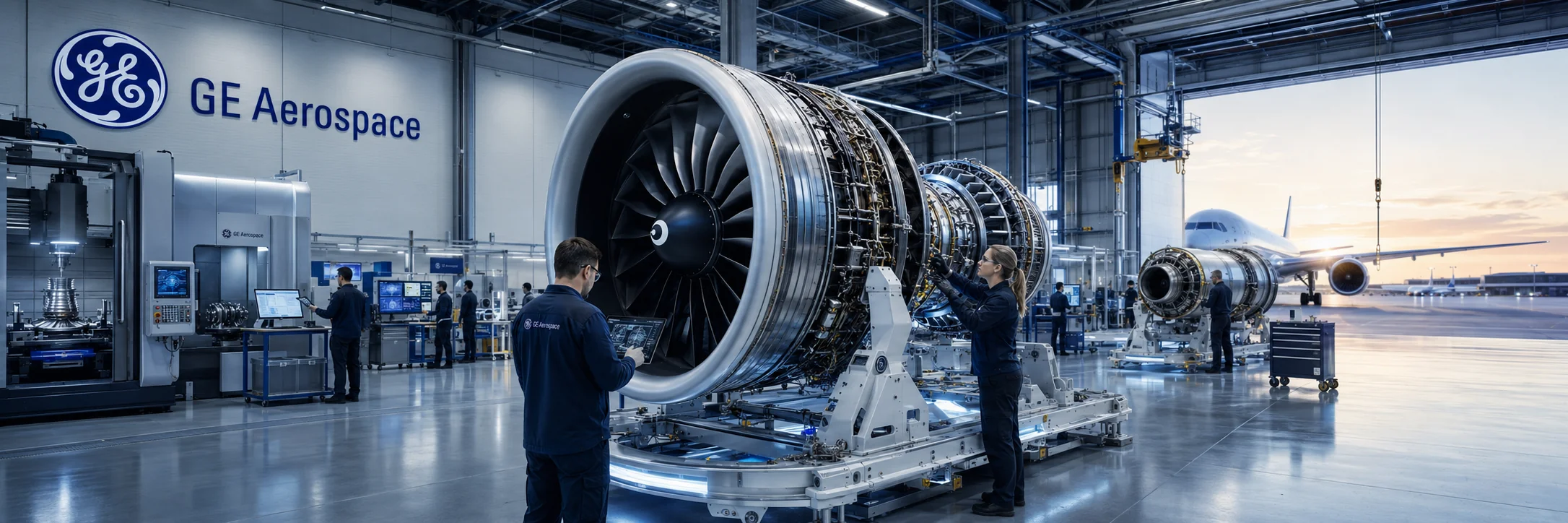
GE created value by joining electrical engineering, research, manufacturing, customer finance, and long-lived service businesses under one corporate system. That combination supplied real capabilities, but it also joined unlike cash cycles, risks, records, and obligations. The 2008 funding crisis exposed how financial conditions could reach the industrial company; the later separations into GE HealthCare, GE Vernova, and GE Aerospace make the operating boundaries clearer without erasing installed bases, contracts, people, or historical liabilities.
GE began by joining electrical capabilities
General Electric did not begin as a financial abstraction. In 1892, Edison General Electric and Thomson-Houston merged, bringing together electrical inventions, manufacturing, patents, and customers. GE's account of the merger describes it as a combination of two electrical companies rather than the invention of a generic conglomerate.
The first useful output was equipment that made electricity workable: lighting systems, generators, transformers, and the engineering needed to install and support them. Those products shared materials knowledge and customers, but they did not become interchangeable. A generator, a lamp, and a transformer each had different designs, factories, service requirements, and failure consequences.
Research made knowledge portable without making products identical
GE created a permanent research laboratory in 1900. The company's history places the laboratory in Schenectady and describes its work in materials, electronics, and engineering. Research gave separate product groups access to knowledge that a single workshop could not maintain, while leaving the later work of design, qualification, manufacturing, and service to particular businesses.
This is an important distinction. A central capability can travel across a portfolio; a qualified product cannot be assumed to travel with it. An aircraft engine, an ultrasound system, and a turbine need different suppliers, tests, regulators, field technicians, and records. The corporate structure can share laboratories, capital, and management routines, but it cannot remove those physical differences.
Diversification joined different clocks
Over the twentieth century GE expanded into appliances, plastics, electronics, aviation, healthcare, nuclear power, and other industrial fields. Each business had its own customers and technical history. Aviation engines remain in service for decades and require parts, inspections, software, and maintenance. Medical imaging must meet clinical and regulatory requirements. Power equipment is installed into projects whose financing, construction, grid connection, and service contracts can outlast a product cycle.
GE Capital added another kind of work. It financed equipment, leased aircraft, issued credit, and later operated across commercial finance, insurance, real estate, and capital markets. Financing could make a GE product affordable to a customer and create a route for equipment sales. It also introduced a cash cycle based on borrowing, asset quality, credit losses, reserves, and access to short-term markets. Those conditions were different from the cash cycle of a factory shipping a machine.
GE Capital made industrial performance depend on funding conditions
The combination was useful while the financial arm could fund assets and customers on acceptable terms. It was also easy to summarize incorrectly. A consolidated earnings number could combine a turbine order, an aircraft lease, an insurance reserve, and interest income even though each depended on different evidence and different risks.
GE's 2008 filing makes the boundary concrete. It reported that GE Capital had reduced commercial paper to $67 billion at year-end, still relied on commercial-paper and term-debt markets, and had access to the FDIC Temporary Liquidity Guarantee Program while market disruption threatened the availability and cost of funding. The filing does not prove that every industrial result was financial engineering; it does show that the combined company’s ability to fund obligations had become a material operating condition.
In 2020, GE's filing still presented GE Industrial and GE Capital together and described debt, insurance contributions, credit ratings, and liquidity as linked concerns. The same report notes that GE Capital's future capital needs and access to funding could affect GE's financial condition. Money was not an after-the-fact incentive. It determined which assets could be held, which customers could be financed, and which obligations could be met before an industrial recovery appeared.
A crisis exposes connections that a portfolio chart hides
The 2008 crisis did not create every weakness in GE. It made the connections harder to ignore. Credit-market stress could raise funding costs, restrict new lending, lower asset values, and force asset sales while industrial businesses were also facing weaker demand. Later insurance-reserve charges, acquisition write-downs, and restructuring decisions had their own causes; together they made the cost of managing one balance sheet across unlike businesses more visible.
There are two defensible readings. One is that GE's centralized system accumulated coordination and opacity faster than its controls could handle. The other is that leverage, the financial cycle, acquisitions, and management choices were the decisive problems, and that a different conglomerate could have managed them. The evidence supports neither the claim that diversification was inherently fraudulent nor the claim that a successful history guaranteed future safety.
Separating GE clarifies operating boundaries
GE HealthCare separated in January 2023. GE Vernova separated in April 2024, leaving GE Aerospace as the public company continuing under the GE ticker. GE's separation FAQ records those dates and identifies the three businesses: healthcare technology, energy equipment and services, and aviation propulsion, systems, and services.
The split changes what investors and managers can see together. A healthcare company can plan around clinical equipment, diagnostics, software, and hospital customers. GE Vernova can plan around power, wind, electrification, grid equipment, and the service of installed turbines. GE Aerospace can plan around propulsion and long-term engine support. Their capital requirements and operating metrics are easier to compare with peers when they are not embedded in one balance sheet.
That does not mean the separation starts from zero. Aircraft engines, gas turbines, wind turbines, medical systems, supplier relationships, engineering records, patents, trained workers, warranties, and service contracts continue to carry history. A legal boundary can clarify who owns an obligation without making the obligation disappear.
The successors still depend on maintained systems
GE Vernova's 2025 annual report illustrates the scale inherited by one successor: $38.1 billion in revenue, a $150 billion backlog, approximately 7,000 installed gas turbines, and approximately 59,000 wind turbines. Those figures describe equipment and services, not simply a collection of factories. The installed base creates future demand for parts, inspections, upgrades, software, field expertise, and customer financing.
GE Aerospace and GE HealthCare have their own versions of the same boundary. A qualified engine or imaging system is useful only when its configuration, maintenance, records, approved parts, and trained service network remain available. The successor companies may focus management and capital, but they still have to preserve the evidence and capabilities that make an installed product safe and useful.
What the GE story can and cannot establish
GE's history shows why a conglomerate cannot be evaluated through a single earnings curve or a list of businesses. Central ownership can support research, financing, purchasing, and service capabilities that separate companies might struggle to build. The same ownership can join risks that move on different clocks and make a consolidated result appear more stable than the underlying obligations.
The later separation is therefore neither a simple confession nor a guaranteed value unlock. It is a change in the boundaries through which capital, accountability, records, and decisions travel. The important question is not whether GE became “too complex” in the abstract. It is whether the people responsible for an engine, a turbine, a scanner, or a financial obligation can still see its condition, fund the required work, and change the next decision before a deferred problem becomes an inherited liability.
CompanyGraph can map GE's historical businesses, successor companies, installed assets, suppliers, financiers, regulators, service contracts, and separation dates. It cannot by itself observe a hidden reserve deficiency, an unavailable spare, a customer’s funding shortfall, or whether a maintenance record matches the physical machine. Its useful boundary is the connection between a corporate decision and the industrial or financial condition that decision was supposed to change.