 CompanyGraph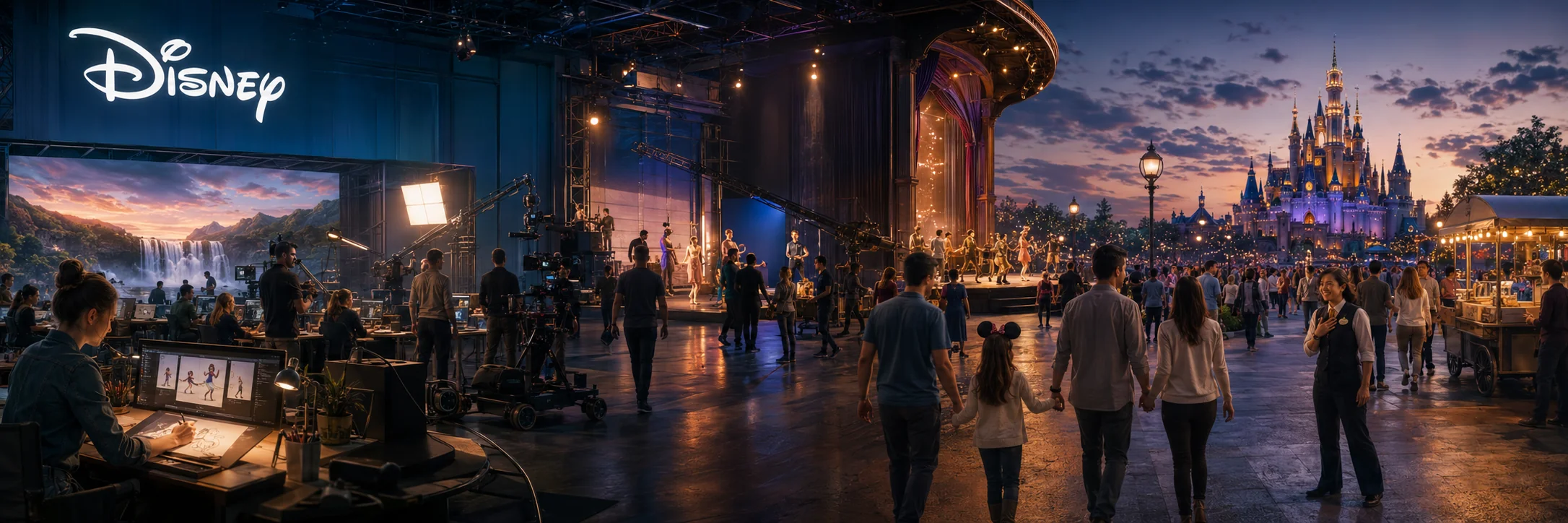
Disney turns stories and characters into audience experiences through production, theatrical and streaming release, licensing, consumer products, parks, and cruises. Each channel preserves and changes the work while adding its own money, capacity, safety, and access requirements. A copyright, stream, ticket, or merchandise sale observes one boundary; durable audience value depends on creative work and the physical and digital routes that keep it usable.
A copyright is not an audience experience
An audience needs more than a legal right. It needs a finished work, a route to watch or use it, a price and access condition it can meet, and an experience worth returning to. Disney's fiscal 2025 annual report describes Entertainment, Sports, Experiences, streaming, parks, consumer products, and content used across those channels. The report describes the businesses, but a copyright does not prove that an audience can find or value the work.
This article follows a story or character from creative development through production, release, licensing, streaming, consumer products, parks, cruises, and audience feedback. The business examples concern Disney; the distinction between a right and a usable experience is broader.
A story enters several physical and digital routes
A creative idea becomes a script, production, finished film or series, release, license, stream, product, or attraction. Each route preserves some elements and changes others. A film can create a character; a park attraction requires construction, operations, staff, capacity, weather planning, and safety; a toy requires design, tooling, materials, inventory, and retail access.
Disney describes Experiences as bringing stories and franchises to life through parks, resorts, cruise ships, vacation experiences, and consumer products. That description makes the ecosystem concrete: it is a set of distinct services and goods, not one undifferentiated content asset.
Cross-channel use reinforces and changes the work
A successful story can support theatrical release, streaming, licensing, merchandise, and an attraction. Each route can introduce characters to another audience and provide feedback for future work. But a release window, a subscription library, a retail product, and a park visit have different prices, capacities, and timing. Making a title immediately available everywhere may improve access while reducing theatrical scarcity or license value.
Acquisitions such as Pixar, Marvel, and Lucasfilm added established creative teams and libraries, but ownership does not guarantee new successful stories. A franchise still requires creative work, rights management, distribution, and audience attention. Repetition can strengthen recognition or exhaust it; the outcome depends on the work and channel, not the logo alone.
Money determines which story reaches people
Disney pays writers, artists, crews, studios, platform engineers, theater partners, park workers, licensees, suppliers, and maintenance teams before every audience payment arrives. A film budget, streaming investment, attraction construction, inventory order, or local marketing campaign commits money before demand is certain. A household may value a title but lack the subscription, ticket price, travel money, or time to use it.
Disney's annual report separates content, streaming, experiences, and consumer products and describes ongoing content investment and capital-intensive experiences. A stream count can rise while the content business remains under pressure; a park can produce strong attendance while requiring maintenance and expansion capital. The available money changes whether a story is finished, distributed, staged, or kept in a library.
Rights, transactions, and audience results answer different questions
A copyright records legal rights. A production file records a defined work. A release record establishes distribution. A stream, ticket, or merchandise sale records a transaction. A park attendance count records entry. A subscriber metric records an account state. A safety inspection records a defined condition. None alone proves that an audience understood, enjoyed, safely experienced, or will return to the work.
Feedback is distributed. A viewer may stop watching. A retailer may report a defective toy. A park operator may see a queue or safety problem. A licensee may find that a product does not sell. A platform may report churn. Correction becomes possible only when the signal reaches someone with audience evidence, creative or operating authority, staff, and money to change the story, release, product, attraction, or service.
What a dependable entertainment ecosystem connects
Disney's work is not complete when a film is finished, a title is streamed, or a character appears on a product. It is dependable only when creative work remains connected to distribution, physical experience, safe operation, access, and feedback from the audience that is meant to use it. A large library can support many routes while leaving each route exposed to its own costs, capacity, and timing.
CompanyGraph can map studios, creators, rights, platforms, theaters, parks, cruise ships, licensees, retailers, suppliers, audiences, payments, and corrective authority. It cannot by itself observe whether a viewer enjoyed a title, a toy was used safely, or a park experience justified the trip. The remaining question is which audience signal reaches creative or operating decisions before a weak route consumes more money.