 CompanyGraph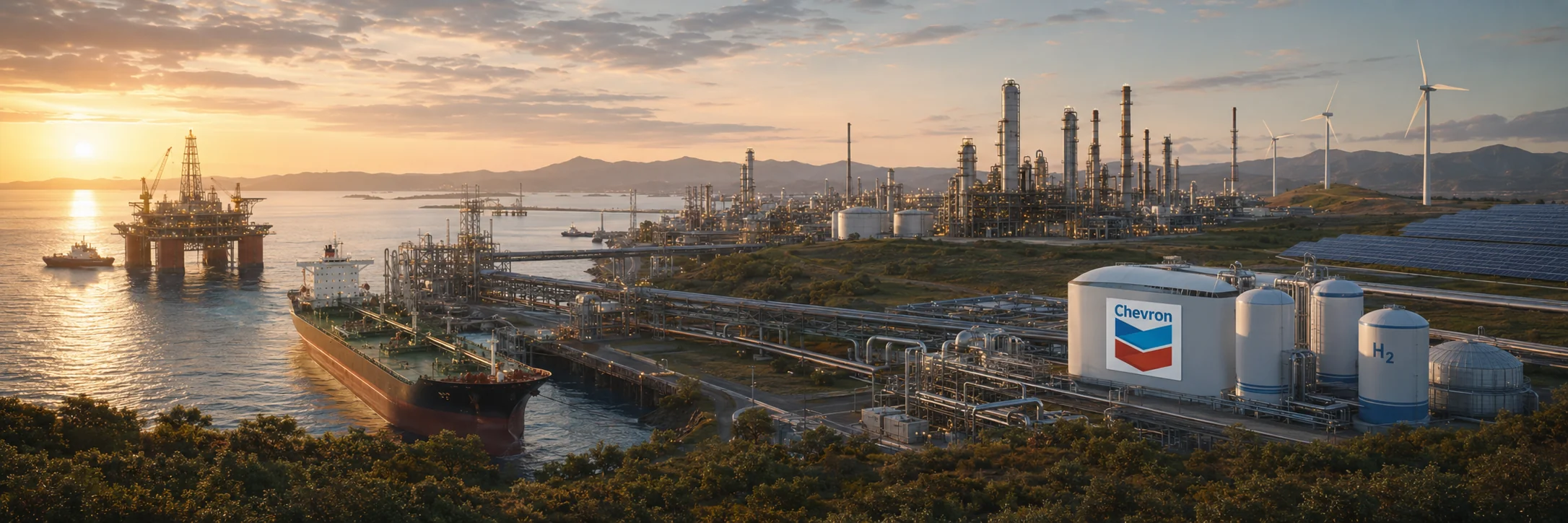
Chevron connects geology, wells, gathering, processing, pipelines, storage, refining, chemicals, marketing, customer equipment, and retirement. A reserve estimate, production meter, product certificate, or emissions report cannot establish complete energy service; stream quality, transport, maintenance, capital, market timing, and corrective authority determine what customers can use.
A household, transport system, factory, or chemical plant does not need a reserve estimate. It needs energy or feedstock in a usable form, at the right place and time, with equipment and contracts that can receive it. Chevron connects geology, wells, gathering, processing, pipelines, storage, refining, chemicals, marketing, and customer equipment to provide part of that result.
Chevron's 2025 Form 10-K describes upstream production, midstream transport, refining, chemicals, marketing, reserves, capital, and lower-carbon businesses. These are related but not interchangeable. A barrel in a reservoir is not a barrel at a refinery. A gas production number is not firm winter delivery. A product certificate is not a complete account of upstream emissions or customer use.
Geology becomes a deliverable stream
Geology becomes a development plan, wells, gathering lines, separation, processing, storage, pipelines, ships, refineries, chemical plants, and customer equipment. Crude oil must be transported and refined into products with specifications. Natural gas may be processed, compressed, transported, liquefied, or used at a power plant. Chemical feedstocks enter another manufacturing route.
Integration can coordinate these steps. A refinery may receive several crude grades, a pipeline may serve several producers, and a marketing network may move products to terminals and customers. Integration does not make the streams interchangeable. Water, sulfur, pressure, temperature, impurities, transport capacity, storage, and customer equipment constrain each route.
Reserve and production are different observations
A reserve report estimates volumes under defined assumptions. A well test observes a location and condition. A production meter records output. A pipeline nomination states intended movement. A refinery assay characterizes feed or product. A product certificate reports a defined specification. Each is useful evidence, but none proves that a customer can receive and use the energy when required.
A reserve can be technically recoverable while a pipeline, compressor, permit, price, or customer is unavailable. A production meter can show volume while a downstream terminal is full. A product can meet its specification while a refinery outage or upstream methane remains outside that certificate. The record answers its defined question; it does not replace the physical route.
Plants, pipes, and customers share the clock
Energy projects spend money on leases, seismic work, wells, platforms, pipelines, compressors, refineries, storage, safety, environmental controls, and decommissioning before revenue arrives. A refinery outage can require expensive maintenance while feedstock contracts and customer commitments continue. A pipeline or terminal expansion may need years of permitting and construction.
Prices and payment timing change the physical response. A low oil price can delay drilling while an existing well still produces. A gas buyer may need firm transport or storage before winter. A refinery may change its crude slate when a grade, vessel, or unit becomes unavailable. A chemical plant may operate below capacity when feedstock or customer demand does not justify the energy and maintenance cost.
Capital discipline can protect liquidity and also postpone redundancy, maintenance, or remediation. The least expensive short-term operating choice is not automatically the route that preserves future energy service or the resources needed to retire an asset safely.
Controls cover defined boundaries
Well integrity, process safety, leak detection, maintenance, product testing, emergency response, emissions monitoring, shipping controls, and regulatory inspections address different risks. A meter can detect a change in pressure without identifying a leak. A product test can pass while a customer stores or uses the product incorrectly. An emissions inventory can be accurate for its boundary while other emissions or displaced effects remain unmeasured.
Feedback becomes corrective only when the event reaches the asset operator, process engineer, pipeline controller, regulator, customer, and budget authority able to change the next action. A leak may require a shutdown, inspection, repair, and reporting. A quality issue may require a different blend or feedstock. A refinery outage may require alternative supply and customer scheduling. The record is useful only if the people who can act can still reach the affected equipment and money arrives in time.
Retirement follows the revenue
Wells, pipelines, refineries, storage tanks, chemical units, and terminals can remain physical obligations after production or revenue falls. Closure, plugging, cleaning, remediation, worker protection, waste handling, and monitoring require money and records. An asset sale can transfer responsibility, but it does not make contaminated material, emissions, or decommissioning work disappear.
Chevron is therefore an integrated set of energy and chemical routes, not a reserve or production number. CompanyGraph can map its wells, joint ventures, pipelines, refineries, terminals, customers, regulators, and capital handoffs. It cannot by itself observe a hidden integrity condition, an unreported emissions source, a constrained terminal, or the authority available to fund a repair or retirement action.
Inside CompanyGraph
The screen below shows companies with the recorded shape of a defended dividend: a long payment streak with quality and free-cash-flow coverage readings in their positive ranges.
Long Dividend Streak With Three-Year FCF Coverage
Three dividend-and-cash-flow observations co-occur: long uninterrupted dividend streak with growth, FCF coverage of dividends on a three-year average with payment stability, and industry-benchmarked FCF/OCF in its elevated range
Long Dividend Streak With Three-Year FCF Coverage
→dividend consistency
dividend coverage and payment stability
ratio cashflow fcf conversion
A match records the streak and its current coverage, not a promise about the next payment.