 CompanyGraph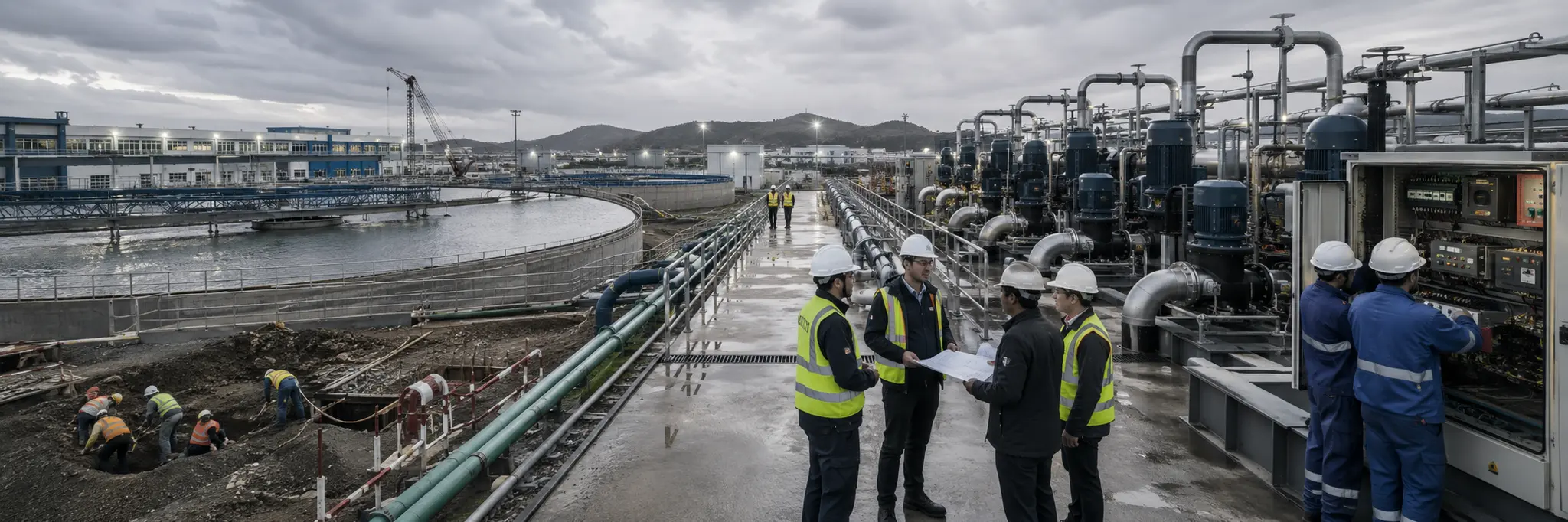
How financing and operating assets you will eventually give away creates a distinct structural position defined by its temporary ownership.
Introduction
Most businesses build assets to own them permanently. The build-operate-transfer model inverts this: a company finances and constructs a large-scale project, operates it for a defined concession period, then transfers ownership to the commissioning entity. The entire business proposition rests on recovering the investment and earning a return within a finite window — after which the company retains no ownership interest.
This model emerged as a mechanism for governments to develop infrastructure without immediate public expenditure. The private company bears the construction cost and execution risk, and the government gains a functioning asset after the concession period.
The arrangement allocates risk to reflect each party's capabilities: the private company bears construction and operational risk, where its expertise provides an advantage, while the government retains long-term ownership, aligning with its permanence and public mandate.
Understanding this model structurally means examining how the concession period creates a defined window for capital recovery, how risk is allocated between the parties, and how the model shapes the competitive dynamics of infrastructure development.
Core Business Model
The revenue model is defined by the concession agreement. During the concession period — which may range from fifteen to fifty years depending on the project — the company operates the asset and collects revenue, either from user fees such as tolls or tariffs, or from availability payments made by the government regardless of usage. The concession agreement specifies the revenue mechanism, the performance standards the company must meet, and the conditions under which the asset will be transferred.
Capital recovery follows a predictable but front-loaded pattern. The company deploys substantial capital during the construction phase, generating no revenue until the asset is operational. Once operations begin, revenue gradually recovers the construction investment and begins generating returns. The internal rate of return depends on the relationship between construction costs, the length of the concession period, and the revenue the asset generates — all of which are substantially defined before construction begins.
Risk concentration is a structural feature of the model. During construction, the company bears the risk of cost overruns, delays, and technical failures. During operations, it bears the risk of demand shortfalls if revenue depends on usage, or performance failures if revenue depends on availability.
These risks are concentrated in a single large project, unlike diversified business models where risks are spread across many smaller activities. The concentrated risk profile means that a single project failure can have material impact on the company's overall financial position.
The transfer mechanism shapes how the company approaches operations during the concession period. Because the asset will eventually be transferred, the company has a structural incentive to minimize maintenance expenditure as the transfer date approaches — the benefits of late-stage maintenance accrue to the new owner, not to the current operator.
Well-structured concession agreements address this through performance standards and handover conditions that require the asset to be in specified condition at transfer.
Debt Financing Activity
Debt issuance is large relative to operating cash flow, absolute financing cash flow is large relative to operating cash flow, and long-term debt is a large share of total debt
Structural Patterns
- Defined Duration — Unlike businesses that operate indefinitely, BOT projects have a contractually defined endpoint. This creates a finite horizon for capital recovery and return generation, making the project's economics calculable at inception, subject to execution risk.
- Risk Allocation Between Parties — The model allocates construction and operational risk to the private party, which has the expertise to manage these risks, and allocates regulatory and political risk to the public party, which controls the regulatory environment. The effectiveness of this allocation determines the model's efficiency.
- Capital Intensity with Delayed Returns — The construction phase requires significant capital deployment with no revenue, creating a period of negative cash flow that may last several years. The ability to finance this construction phase efficiently is a competitive differentiator among BOT operators.
- Concession as Competitive Barrier — Once a concession is awarded, the operator holds an exclusive position for the defined period. Competitors cannot replicate the asset or the revenue stream during the concession. This exclusivity provides structural protection but is time-limited by the concession term.
- Government Relationship Dependency — Success in the BOT model depends heavily on the relationship with the commissioning government. Political changes, regulatory shifts, or contract disputes can affect the project's economics. The company's ability to navigate government relationships is a critical capability.
- Pipeline Replenishment — Because each project has a defined endpoint, the company must continuously win new concessions to maintain its revenue base. The pipeline of future projects is structurally important — a company that cannot replenish its concession portfolio faces declining revenue as existing concessions expire and assets are transferred.
Example Scenarios
Toll road concessions demonstrate the model in transportation infrastructure. A company finances and constructs a highway, operates it for twenty-five years collecting tolls from users, and then transfers the road to the government. During the concession period, revenue depends on traffic volumes, which are influenced by economic conditions, fuel prices, and the availability of alternative routes. The company manages operational costs including maintenance, staffing, and toll collection systems. The economics are favorable when traffic volumes meet or exceed projections, and unfavorable when they fall short — a risk that has materialized on multiple high-profile toll road projects where actual traffic was significantly below forecasts.
Power generation concessions illustrate the model in the energy sector. A company builds a power plant, operates it for thirty years under a power purchase agreement with the government or a utility, and then transfers ownership. Revenue is typically based on availability — the plant is paid for being ready to generate power — rather than on actual generation, which reduces demand risk. The company bears construction cost risk and operational performance risk, but the availability-based payment structure provides more predictable revenue than usage-based models.
Water and wastewater treatment facilities demonstrate the model in essential services. A company builds a treatment plant, operates it for a concession period while meeting government-specified water quality standards, and transfers the facility at the end of the term. Revenue comes from service fees paid by the government or directly from users. The essential nature of water services provides demand stability, but the regulatory environment around water quality, pricing, and environmental standards creates compliance risks that the operator must manage throughout the concession.
Durability and Risks
Construction cost overruns represent the most concentrated risk. A project that costs significantly more than budgeted may never recover the additional investment during the concession period. The fixed concession term means that cost overruns cannot be compensated by extending the operating period — the additional cost permanently reduces the project's return.
Political and regulatory risk is inherent in any long-duration arrangement with a government counterparty. A change in government may bring renegotiation pressure, changes in regulatory standards, or outright contract disputes. The longer the concession period, the more likely that political conditions will change during its term, and the company's recourse in disputes depends on the legal and institutional framework of the jurisdiction.
Demand risk, where it exists, can fundamentally alter project economics. Traffic projections for toll roads, passenger forecasts for airports, and usage estimates for utilities have historically been subject to significant optimism bias. When actual demand falls substantially below projections, the project may fail to recover its construction investment during the concession period, resulting in a loss despite years of operational revenue.
What Investors Can Learn
- Assess the concession portfolio's maturity profile — Understanding when each concession expires reveals the company's revenue trajectory and its need to win new projects. A portfolio concentrated in near-term expirations faces declining revenue without successful replenishment.
- Evaluate construction execution capability — The ability to complete projects on time and on budget is the primary operational differentiator. Review historical construction performance across multiple projects to assess this capability.
- Analyze risk allocation in concession agreements — The specific terms of each concession determine how risks are shared between the company and the government. Agreements that expose the company to uncapped demand risk or uncapped cost risk create structural vulnerabilities.
- Consider jurisdiction risk — The legal and political stability of the jurisdictions where the company operates determines the reliability of its concession rights. Companies operating in jurisdictions with strong rule of law and stable institutional frameworks face lower political risk.
- Monitor the project pipeline — The visibility and quality of future project opportunities indicates whether the company can sustain its revenue base as existing concessions mature. A company with a strong pipeline of probable projects is structurally better positioned than one dependent on winning competitive tenders.